



Mike Bain/cvnznews.com
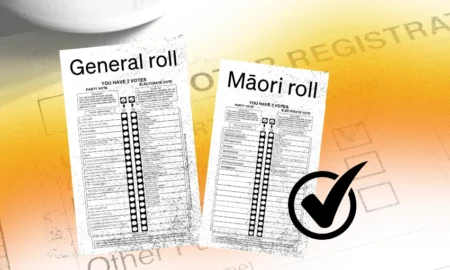
On Saturday, New Zealanders will head to the polls to decide who will govern our nation for the next three years.
As election day approaches, Christians face an important question: Is voting simply a civic right that we may or may not choose to exercise, or is it also a responsibility before God?
Many believers are understandably weary of politics. Campaigns can be divisive, public debate is often heated, and few Christians will agree on every policy or political party. Yet despite these realities, Scripture provides strong reasons for followers of Christ to participate thoughtfully in the democratic process.
A Privilege Much of the World Does Not Have
Unlike millions of people living under authoritarian regimes, New Zealanders are entrusted with a significant degree of influence over the direction of their nation.

We do not choose kings. We do not live under military rule. Through the ballot box, ordinary citizens help determine who will make laws, set government priorities, manage public finances, protect freedoms, and shape the future of the country.
That privilege carries responsibility.
The Bible teaches that everything entrusted to us by God should be stewarded wisely. Christians readily apply this principle to finances, family, talents, and time. Yet citizenship is also something God has entrusted to us.
The opportunity to vote should therefore be viewed not merely as a political privilege, but as an act of stewardship.
God’s Purpose for Government
Scripture teaches that government is not a human invention but an institution established by God.
Romans 13 explains that governing authorities exist to reward what is good and restrain what is evil. While governments are imperfect and politicians are fallen human beings like the rest of us, civil authority plays an important role in maintaining justice, protecting life, preserving order, and defending freedoms.
The decisions made in Parliament affect real people and real families.
Government policy influences issues such as freedom of religion, parental rights, education, healthcare, public safety, care for the vulnerable, economic opportunity, and the protection of the unborn. It shapes the environment in which churches, families, businesses, and communities operate.
Whether Christians like politics or not, politics affects their neighbours every day.
Loving Our Neighbour Includes Civic Responsibility
When Jesus commanded us to love our neighbour, He was not speaking only about personal acts of kindness.
Love for neighbour should influence every sphere of life, including the way we participate in public life.
The laws passed in Wellington can either help or harm families. They can strengthen freedoms or weaken them. They can protect the vulnerable or leave them exposed.
No political party perfectly reflects biblical values. No candidate is without flaws. Yet Christians are called to prayerfully assess policies, character, competence, and principles before casting a vote.
Choosing not to vote does not remove us from the consequences of political decisions. It merely leaves those decisions entirely in the hands of others.
Voting Is Not Worship
Christians must also keep politics in perspective.
Our ultimate hope is not found in Parliament, political leaders, or election results. God’s kingdom does not rise or fall on the outcome of Saturday’s vote.
Christians should avoid treating any party as a saviour or any politician as beyond criticism.
The Church’s mission remains the proclamation of the Gospel. No election result can accomplish what only Jesus Christ can do.
Yet recognising the limits of politics should not lead to political apathy.
Jeremiah instructed God’s people to seek the welfare of the city in which they lived. In a democratic nation, voting is one practical way citizens contribute to the welfare of society.
The Role of Churches
Churches should not tell members which party to support.
However, churches can help believers think biblically about the major issues facing the nation.
Pastors and church leaders have a responsibility to teach biblical principles concerning the sanctity of life, marriage and family, justice, religious freedom, compassion for the poor, personal responsibility, and human dignity.
Faithful Christians may sometimes reach different conclusions on political questions. Respectful disagreement is inevitable.
What should not happen is silence.
The Church cannot effectively disciple believers in every area of life while ignoring the issues that shape the nation they live in.
Pray, Then Vote
As New Zealand reaches the final days of this election campaign, Christians should commit themselves first to prayer.

Pray for wisdom.
Pray for discernment.
Pray for the candidates and parties seeking office.
Pray for our nation.
Then on Saturday, exercise the privilege that generations before us fought to preserve.
Vote not out of fear.
Vote not out of tribal loyalty.
Vote not because a politician promises to solve every problem.
Vote as a Christian citizen seeking the welfare of New Zealand, loving your neighbour, and stewarding faithfully the influence God has entrusted to you.
In a democracy, voting is one of the most significant ways ordinary people can help shape the future of their nation.
For Christians, that makes it far more than politics.
It is an act of stewardship.