

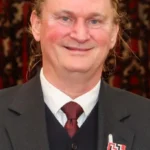
Dr. Christopher Longhurst KSO
The New Zealand Catholic Bishops’ news outlet, CathNews NZ, recently amplified survivors’ frustration at the Government’s sluggish pace in acting on the Royal Commission’s recommendations. Fair enough. But let’s not pretend the obvious question isn’t sitting in the middle of the room like a siren. When will the Church stop pointing fingers and start holding itself to the same standard?
The irony is impossible to ignore. A Church that has repeatedly resisted revisiting inadequate redress for survivors now criticises the Government for moving too slowly. A Church that has spent years defending gradual processes, lengthy reviews, and incremental reform suddenly discovers the language of urgency — but only when pointing at someone else’s failures.
Survivors know that language well. They have been speaking it for decades, mostly into silence.
The Church’s criticism of Government delay isn’t wrong. Government action has been painfully slow. But moral credibility isn’t earned by saying the right thing in a press release. It’s earned by living the standards you demand of others — especially when those standards cut close to home.
And here’s the deeper irony: the same Government the Church rebukes has directed many faith‑based survivors back to the very institutions where the abuse occurred. For them, seeking justice from the Church is not a process — it’s an endurance test. I know this not only through advocacy with other survivors, but through my own experience.
Recently, the Society of Mary declined to revisit my historic settlement, despite my request that it be reassessed against contemporary redress standards and the seriousness of the abuse I suffered. The Society’s Provincial, Mervyn Duffy SM, denied the request and mediation, responding instead through his lawyer, Gerard Dewar. Whether one agrees with that decision or not, it is difficult to reconcile with the Church’s public calls for urgency, fairness, and a survivor‑centred approach.
Nor was that my only experience. After raising concerns about the New Zealand Catholic bishops’ redress processes, their National Office for Professional Standards responded through external legal counsel rather than engaging through its pastoral redress process. For survivors, such responses don’t feel like care. They feel like institutional self‑protection dressed up as procedure.
These are not isolated grievances. Variations of the same concerns echo across the country. And they raise a blunt question: how persuasive are the Church’s calls for Government accountability when so many survivors still encounter delay, defensiveness, and legalism within the Church’s own systems?
Church leaders are right to demand urgency from the Government. Survivors have been making that same plea for years. But urgency cannot be a virtue the Church expects only from others. It must be a virtue it practices.
Before Church leaders publicly align themselves with survivors calling out Government delay, they must ask why so many survivors in their own Church still face delay, denial, and procedural stonewalling.
Their prophetic voice will carry real moral authority only when survivors can point to the Church’s own reforms as evidence that it practices what it preaches.
Until then, the New Zealand Catholic bishops’ criticism of Government delay will continue to sound less like prophecy and more like selective memory.
If urgency matters — and it does — then urgency begins at home.



16 Comments
As Aaron McGruder has apparently says: “I want the news delivered unbiased. I thought that was the whole point with journalism.” Balance is important – especially in the case of a topic like abuse. Otherwise, the reader might be mislead.
Thank you for sharing with us a survivor’s point of view.
Hello there, thank you very much for this brilliant article by Dr Longhurst on ‘Urgency Begins at Home — So When Will the Church Wake Up?’ I saw the original CathNewsNZ repost. It is deeply embarrassing CathNews would engage in tactics of that kind. Even Catholic readers are not so easily misled by such approaches. Again thank you for publishing Dr Longhurst’s piece and for allowing a much needed conversation to take place. I have also noticed that even members of the clergy are expressing their support for the article on social media.
This is an important and timely article because it highlights a fundamental challenge facing the Catholic Church in Aotearoa New Zealand. It is also important that Catholic media outlets contribute to this conversation with fairness and balance. When platforms such as CathNews NZ publish perspectives calling for action from others they also have a responsibility to ensure that Survivor perspectives and critical voices are given appropriate space as well. Reposting commentary without engaging the wider context risks presenting only one side of a complex and painful issue.
I applaud Dr Christopher Longhurst directness and accuracy in holding the NZ Catholic Bishops Council accountable for constantly evading the Catholic Church responsibility to address the issue of compensation for survivors of clergy abuse and further gaslighting the total seriousness of redress. Survivors who have already endured the exposure from the Royal Commission of Inquiry do not require further iinvasive interrogation nor inaccurate assessment from Churches, Religious Institutions or Government.
The article by Dr. Christopher Longhurst flows from his experience. Not only are his points totally on target with reality, they summarize the universal cry of all victims of abuse and their advocates worldwide. In fact, delay is the first weapon in the arsenal utilized by the Catholic Church to break down a survivor seeking justice. It is total hypocrisy for the Catholic Church to criticize the government’s tactics when the Catholic hierarchy “wrote the book” on this very tactic and practices it to perfection. Bravo, Dr. Longhurst, for your insightful words!
In the article, Dr Christopher Longhurst points to an abuse of power by those in authority. These Church leaders embrace their power and position to deny justice. For the Church hierarchy to squash and silence victims only serves authority and harms victims and survivors.
Wow! What a meaningful piece by Dr Longhurst. Spot on comment that points to the very core of the problem. Those in levels of authority in the church wield power that frankly ‘outguns’ the survivors who need care and support from the very ‘source’ of their life altering abuse. Where does the ‘conscience’ aspect of these leaders come into this debate? Taking cover and legal protection behind lawyer groups is not the way of justice. It is careful and manipulative coersion all carried out at ‘arms length’. I as why? Is this the message of the Way the Truth and the Light?
I applaud Christopher Longhurst for speaking truth to power! In my years working with survivors of clergy sexual abuse, I would have to say Chris’ observations are spot on. It seems to me that Christ instructed his followers to address their own faults before attempting to correct others. Or are the lessons of the Bible only for the “little people?” Hypocrisy is not a good look for the Church.
YES YES it seems that way. What is good for the Goose MUST also be good for the Gander!
Great article! Thank you. We know the church loves to delay, delay, delay. Never cared about survivors.
High praise to Dr Longhurst for clearly and forcefully calling out the Catholic Church’s longstanding policy & practice of delaying justice for survivors by all possible means. And his article also shines the spotlight on the Church’s ongoing hypocrisy – claiming they care for survivors while demonstrating by their actions the exact opposite. The Gospel of Luke states “Beware of those who pretend to be good but are not”. As Chris said, judge them by their deeds, not their words. It is repeatedly & painfully evident that just when you think you might have reached the end of the Catholic Church’s road of hypocrisy they pave another 50 miles.
Thank you, Dr. Christopher Longhurst, for your courage and moral clarity in writing this important article. It takes integrity to speak the truth in the face of hypocrisy. One of the greatest tragedies is the hypocrisy that exists within churches that preach justice, compassion, and protection of the vulnerable, yet fail to hold abusers accountable or respond with transparency. Real faith is demonstrated through action, not appearances. Thank you for challenging leaders to live out the values they proclaim.
It’s hard for me to listen to any criticism from the Church when it’s clear that the Church is one of the biggest perpetrators of delay tactics … world wide. Many thanks to Christopher for clearly pointing the hypocrisy out.
Pingback: Opinion: Accountability, Editorial Judgement, and the Catholic Church’s Response to Abuse Survivors - cvnznews.com
Pingback: Editorial: Accountability on Trial - cvnznews.com
Many thanks to everyone above for your thoughtful and constructive comments on this article. I am very grateful for your engagement with the issues raised, and I am especially grateful to CVNZ for giving space and voice to this important discussion. I also appreciated reading Mr Mike Bain’s subsequent clarification of the issues in his editorial: https://cvnznews.com/editorial-accountability-on-trial/ . When matters such as accountability, redress, and the experiences of survivors are being discussed, it is essential that information is presented honestly. Open and respectful dialogue is vital if we are to ensure that these important issues are understood properly and addressed with the seriousness they deserve. Thank you again for your support and for standing alongside efforts to promote truth, accountability, and greater transparency.