


Sarah McMillan/cvnznews.com
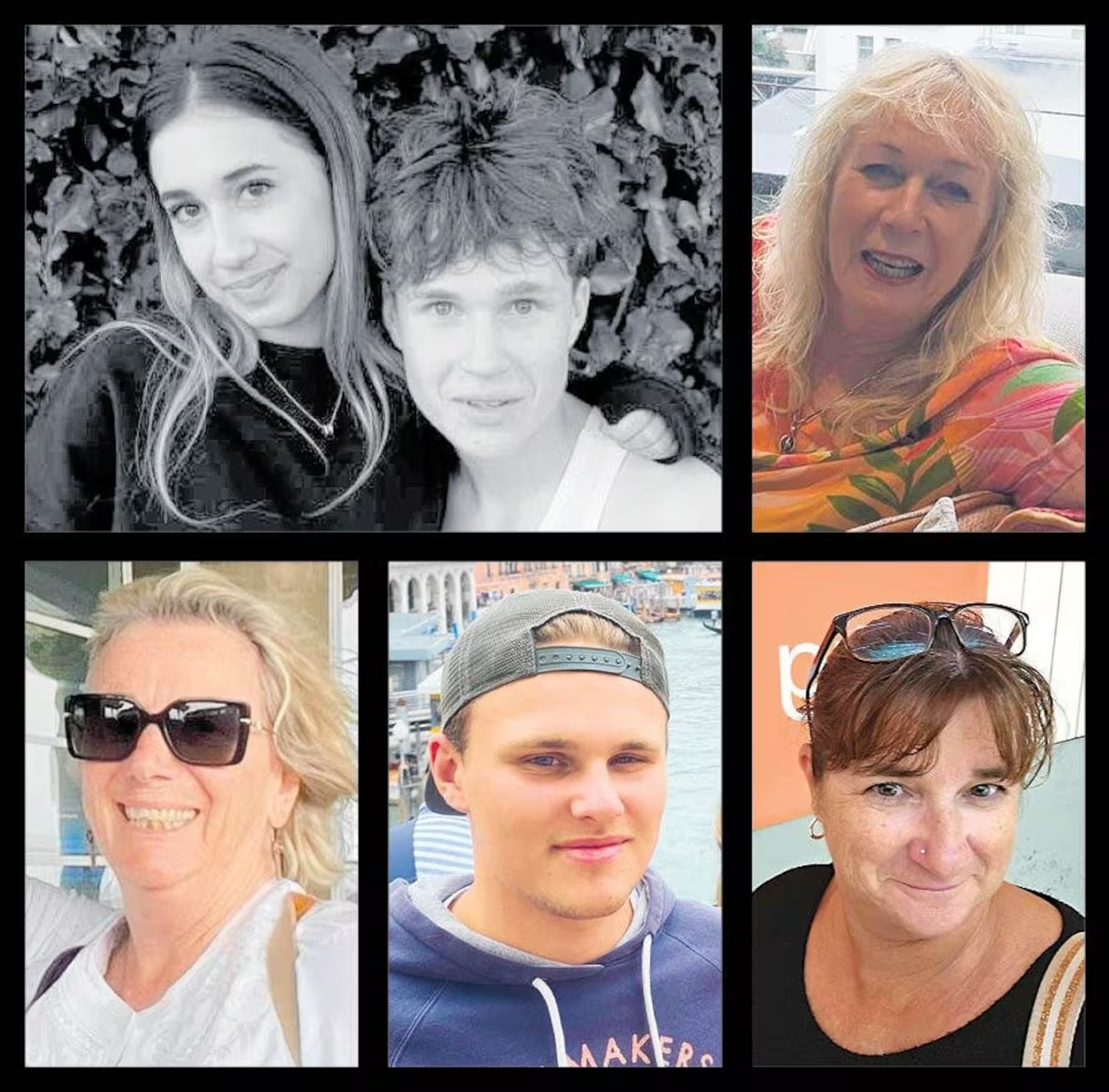
Image: The six people killed in the Mauao landslide were (clockwise from top left) Pakūranga College student couple Sharon Maccanico and Max Furse-Kee, both 15; Rotorua property manager Susan Doreen Knowles, 71; Morrinsville educator Lisa Anne Maclennan, 50; Swedish tourist Måns Loke Bernhardsson, 20; and Rotorua interior design store co-founder Jacqualine Wheeler, 71.
For nearly three decades, warnings echoed around the base of Mauao — quiet, technical, easily filed away warnings that never made it to the people sleeping beneath the mountain. On January 22, those warnings finally roared to life. A landslide tore down the slope and into the Beachside Holiday Park, killing six people and exposing a systemic failure that Tauranga City Council can no longer look away from.
An external review released this week paints a picture that is as stark as the scar now carved into the mountain. Former High Court Judge Paul Davison found that the tragedy was not an act of nature beyond human foresight, but a disaster “preventable” — the result of missed opportunities, siloed information, and a risk that was known, documented, and repeatedly raised by experts over more than 20 years.

The report reveals that consultants warned the council in 2006 that a debris flow could kill up to 21 people. In 2023 and again in 2025, specialists urged the council to implement a Trigger Action Response Plan — a simple, inexpensive system that would have required evacuation when signs of danger appeared. Those signs did appear: smaller slips, muddy water streaming from the slope, and a rare red heavy‑rain warning. None of it triggered action.
Instead, the responsibility fell by default to a campground manager who had never been trained in landslide risk and had no framework to guide decisions. Davison’s review is blunt: the organisation left frontline staff “ill‑equipped and unprepared” to make life‑saving calls.
Mayor Mahé Drysdale has apologised to families, acknowledging that the council “should have done better” and that the community had been put at risk for 27 years. He has promised every recommendation will be implemented — a commitment that now sits under the weight of public scrutiny and political pressure. Local MP Tom Rutherford called the findings “deeply confronting”, while Labour leader Chris Hipkins urged the Government to act immediately to ensure such a tragedy never happens again.
The human cost remains the hardest part of the story. Six people — teenagers, grandparents, a teacher, a tourist — never made it home. Their families heard the findings first, and Drysdale says he looked them in the eye and promised change. Whether that promise becomes reality will define Tauranga’s next chapter.
Mauao, the campground, and the Mount Hot Pools remain closed. The slip site has regressed again, shifting another 8000 cubic metres of earth and forcing further closures. Businesses nearby are struggling, and the future of the campground is now an open question.
The review does not blame any single person. Instead, it indicts a system — one that allowed critical knowledge to be lost through restructures, ignored through siloed teams, and never escalated to those with the authority to act.
A mountain moved. A community grieves. And a council must now prove that it can finally listen.