
Thumbs Up for the Mongrel Mob. Middle Finger to its Victims.

Ani O’Brien
I am somewhat of a purist when it comes to voting rights. It is my firm belief that the right to vote is fundamental and should not be taken away for any reason. It is controversial among my friends that I oppose the Coalition’s legislation to prevent prison inmates from voting. I do realise that this population overwhelmingly vote for left wing parties, but it is their right to do so. Even if we sequester criminals and take away their physical freedom, they are still part of society at large and I don’t think disenfranchisement should be part of their punishment.
This may seem strange given I am outspoken about the need for tougher sentences and I know many readers will disagree with me, but I view ‘the vote’ as an almost sacred right and rite.
I just want to provide that context before I launch into what will likely be a very outraged and frustrated piece. Because even if I think the very worst New Zealanders should be able to vote, it does not mean that I think they should be pandered to and legitimised by politicians cynically pursuing their collective support.
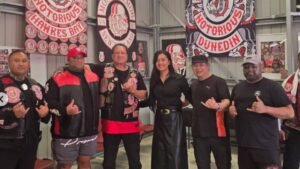
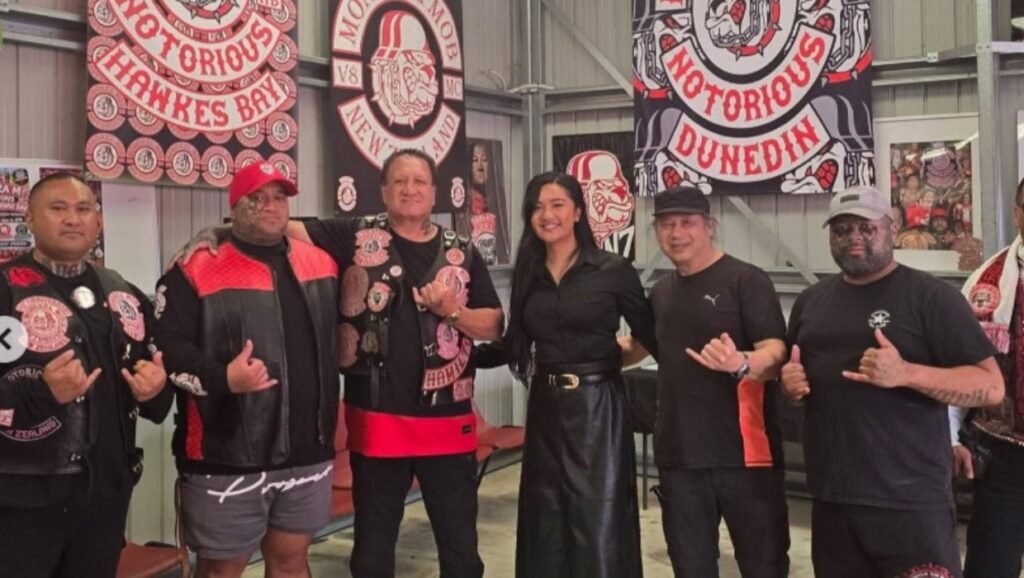
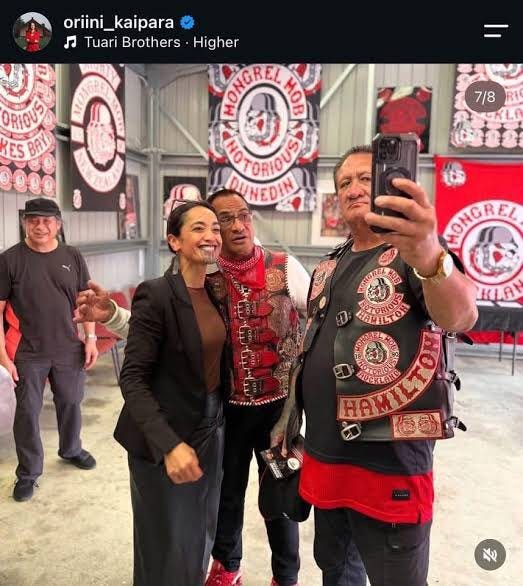
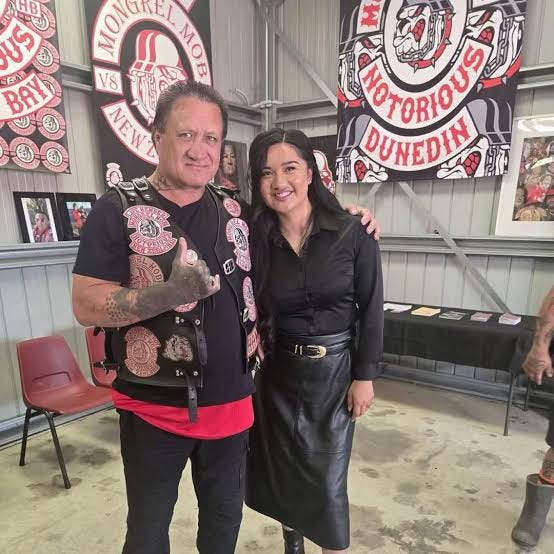
I am quite frankly disgusted by the images that have emerged this week of Green Party and Te Pāti Māori MPs at a Mongrel Mob gang pad grinning with patched members in photos underneath gang insignia. Te Pāti Māori MP Oriini Kaipara even referred to the gang as the “Whero Whānau” (Red Family) in multiple social media posts. The familiarity, legitimising, and disrespect for victims gang crime is sickening. Utterly despicable.
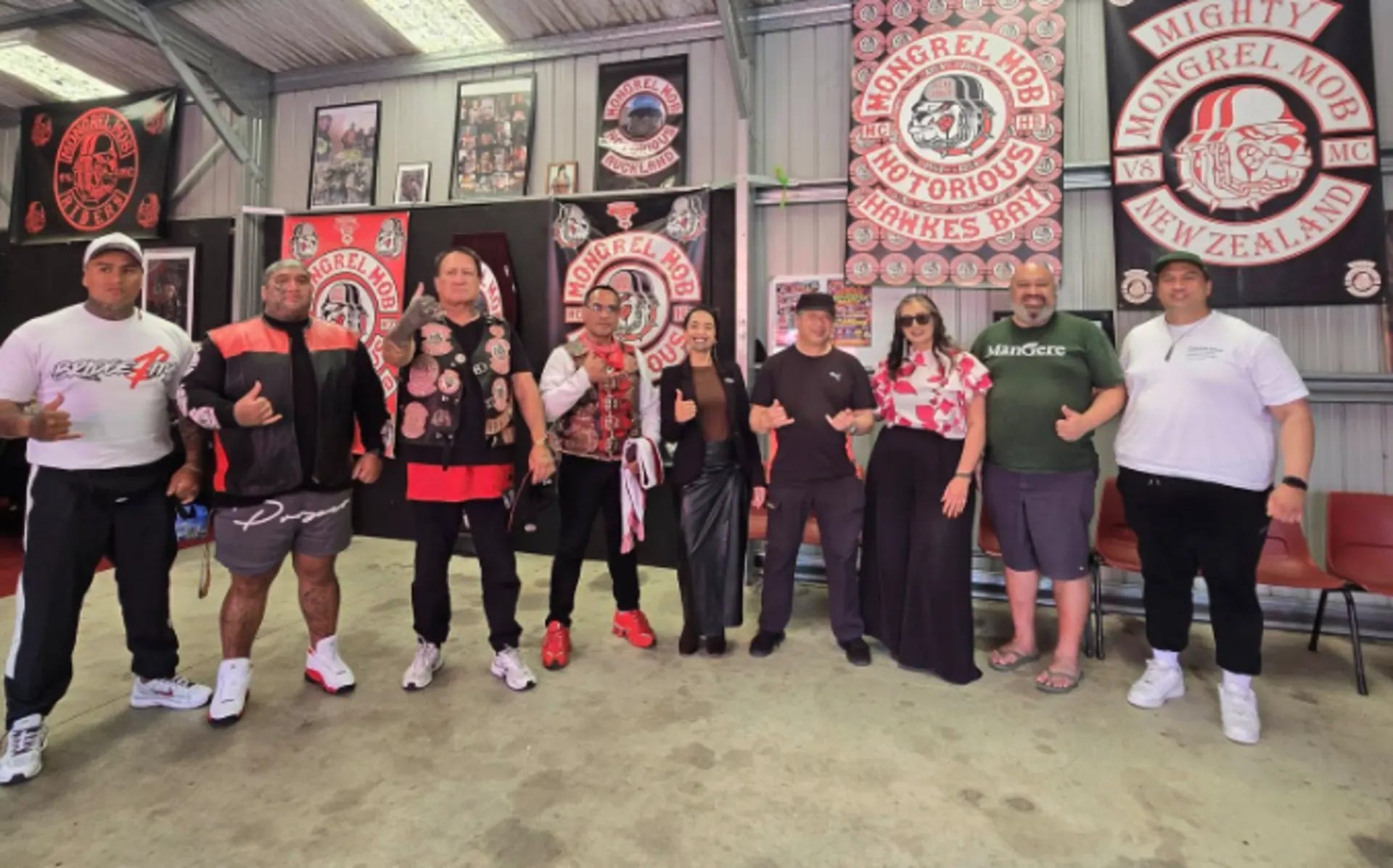
Present at the Mongrel Mob pad south of Auckland, were Green MP Hūhana Lyndon, Green candidate Michel Mulipola, and Te Pāti Māori MPs Oriini Kaipara and Hana-Rāwhiti Maipi-Clarke
Greens co-leader Marama Davidson has been defiant and said the party would not apologise for meeting with the gang. She asserted “We don’t change who we are as a political party just for the campaign, you know.” The MPs present have framed the excursion as an opportunity to engage with marginalised communities and suggested that they are doing some kind of outreach that will have a positive impact on gang statistics.
Let’s be honest here. That is complete bullshit. They all visited the gang pad to fish for votes. They were campaigning and cozying up to some of New Zealand’s most violent men because it was politically beneficial for them to do so. They weren’t staging an intervention, demanding they cease their lives of crime, or announcing a policy to dismantle organised crime in New Zealand. They had their arms around patched members and were giving the thumbs up or doing pūkana.
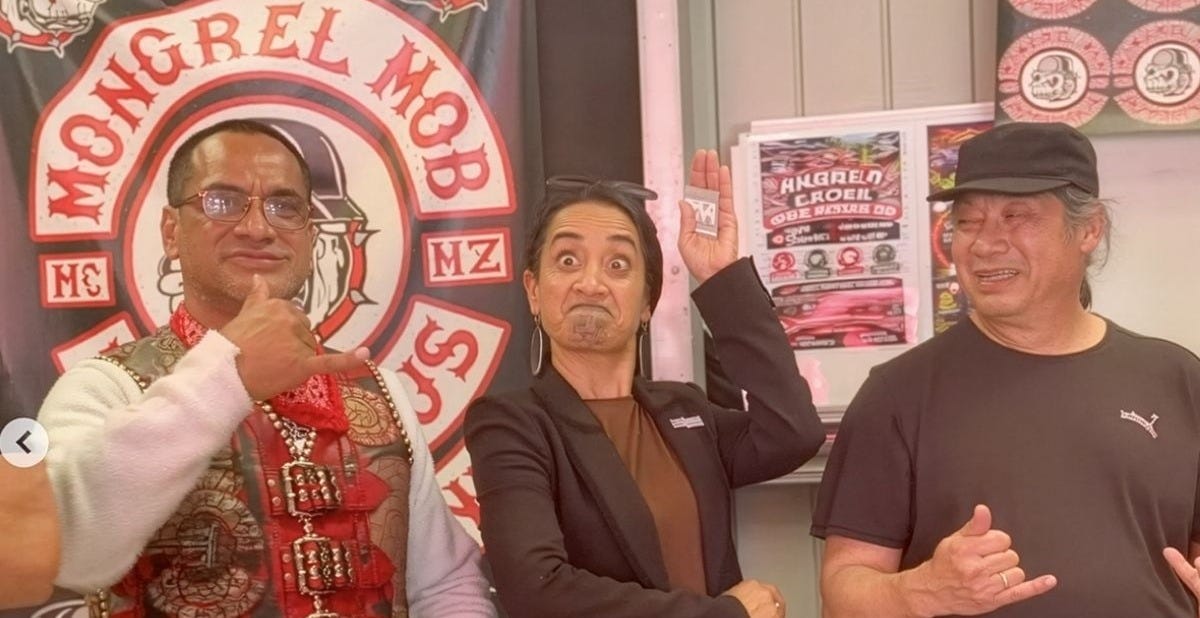
Political attention is finite and where parties, and candidates, direct their attention in the weeks before an election is pretty revealing of their priorities. For so many MPs to show up to a mob pad as if it were a local bowling club is a terrible insight into who they think is worthy of their time. How many organisations have these MPs visited that support women fleeing violent relationships, families affected by methamphetamine addiction, people seeking help after sexual assault, business owners who endure intimidation from gangs, and communities that deal with the impact of organised crime everyday?
Heather Du Plessis-Allan interviewed independent victim’s advocate Claire Buckley on Newstalk ZB after the photographs were published online and her visceral anger was plain to hear. She said she does not oppose engagement with gang communities when the objective is clearly to end the harm they cause, but she argues that it seems these MPs would rather engage with the Mob than their victims. She said, “No wonder gang recruitment is up when you get this kind of legitimisation from politicians.”
The excuses from the MPs have been difficult to take seriously. Oriini Kaipara argues that whānau relationships don’t disappear when there is a patch, Green MP Hūhana Lyndon invoked an argument about access to healthcare, and there is a lot of chat about “marginalisation”. But anyone with a bit of sense can see this is about courting votes for an election that this less than a month away. This is a matter of what these politicians are willing to stomach, turn the blind eye to, in exchange for bringing in votes from criminals.
And it is a lot to swallow. A massive dead rat. An indictment on their moral compasses that it appears to bother them so little. It is also pretty ironic that the Greens recently made a song and a dance about pulling out a series of bipartisan debates because the host, the Taxpayers’ Union, was featured in a quickly discredited defamatory book by hard left activist Nicky Hager, but they are willing to stand next to patched gang members with rap sheets that run pages long.
The Mongrel Mob is not a benign cultural organisation nor a club for poor ol’ disadvantaged men seeking companionship. Rather than operating as a nation-wide organisation, it is made up of several chapters that have considerable independence. It has historically been one of New Zealand’s largest gang organisations and its scale is what appeals to the politicians sucking up to them for votes.
The gang that is so awful and despicable that it once had its own episode on a television series called “The World’s Deadliest Gangs” as well as on another TV series called Ross Kemp on Gangs. They are pedlars of misery and suffering. They destroy communities with drugs and commit violent crimes at alarming rates. And it should be remembered that even though this is horrible for the wider community to endure, it is actually disproportionately their own families, particularly the women and children who suffer the worst of their violence.
The Mongrel Mob has been part of New Zealand’s criminal landscape for more than sixty years. They actually emerged in the 1960s from groups of predominantly white men moving between Wellington and the Hawke’s Bay, but as Māori urbanisation and Pacific migration transformed New Zealand’s cities, the gang’s membership makeup changed too. By the 1970s the Mongrel Mob had become largely Māori.
Violence has been part of the Mongrel Mob’s culture from the early days and they have had a bloody rivalry with Black Power which was formed around 1970. They developed a culture of intentional offensiveness adopting a bulldog wearing a German military helmet as their mascot. They used (and still do) a lot of Nazi symbology including swastikas and their Sieg Heil salute. Criminologist Jarrod Gilbert says that this was all due to wishing to cause as much offence as possible rather than a coherent connection to Nazi ideology.
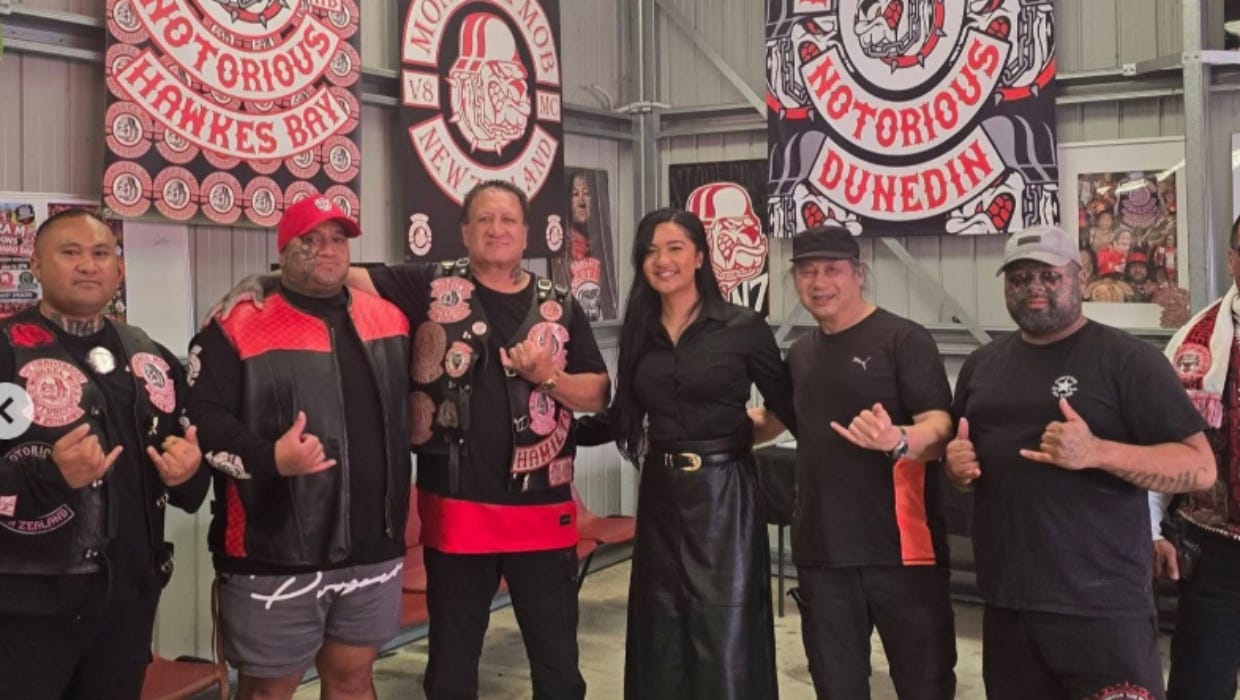
This is who left wing politicians attach themselves to without shame. Who they call “whānau” and embrace for photos. The history represented by the banners they stood in front of, however, is ugly, brutal, and has created victims of many thousands and thousands of New Zealanders.
There have been concerted efforts in recent years by the gang to rehabilitate their image and present themselves as community groups. Waikato Mongrel Mob Kingdom even had a strange PR woman called Louise Hutchinson for awhile, though I cannot find reports of her recently. The leader of the chapter Sonny Fatupaito (also known as Sonny Fatu) went to great lengths to attempt to convince the public that his members were abandoning the violence, drug dealing, and criminality. Fatu even went as far as to invite journalists, politicians, and prominent Māori leaders to his headquarters to see the supposed transformation.
Unfortunately, it was all for nought though. The credibility of the Waikato Kingdom’s rehabilitation was severely undermined in spectacular fashion by the arrest of senior member Mark Griffiths (Griff). Griff had been front and centre promoting the gang’s new direction in 2019, speaking to the media about breaking cycles of dysfunction. He was in fact Fatu’s second-in-command and even delivered a guest lecture at the University of Canterbury. However, police investigations uncovered his leadership of a substantial commercial drug enterprise. He was found to have been obtaining and distributing large quantities of methamphetamine and GBL across the North Island. And, in 2023, after pleading guilty he was sentenced to 10 years in prison. Others from the chapter were implicated in the crimes however, Fatu kept his hands clean and plead ignorance.
Fatu also claimed to be fostering a “new kaupapa” in which practices like “blocking” are banned. Blocking is slang used most notably by Mongrel Mob and Black Power to refer to “putting women on the block” that is bending them over something and gang raping them. This has been used for initiations into the gangs. The practice came into public awareness most prominently after the 1987 murder of teenager Colleen Burrows who resisted being put on the block by Mongrel Mob members and a case in 1986 (criminal proceedings in 1987) when a young woman was kidnapped and taken to a Mongrel Mob convention in Ambury Park where she was raped by 15 Mongrel Mob members.
There was also a high profile case in 1993 which saw 9 Mongrel Mob members convicted of sexual offences, and sentenced to a combined 80 years in prison, relating to 3 young women who were subjected to sexual violence at the Rotorua Mongrel Mob headquarters. The convictions related to multiple sexual assaults, including rapes involving a bottle and a hammer. The case also made headlines because the Mongrel Mob members attempted to intimidate the women into withdrawing their testimony. Gang member Gillies Jacobs beat one of them with a baseball bat and forced her to sign an affidavit withdrawing her allegations.
The Mongrel Mob claims this is a thing of the past as if (even if it were true) that excuses the horrific history of sexual violence and the long trail of victims they have left behind. In any case, the evidence does not support that the gang has left its rape culture behind.
Here are just a few recent cases. In January this year, Mongrel Mob member Lou Harmer was sentenced to 12 years and 6 months imprisonment for 14 counts of serious sexual offending against multiple young girls.
In 2025, a news headline read ‘“Both men helped themselves”: Mongrel Mob members raped 14-year-old in motel room’. Ruaumoko Taiapa and Raniera Daniels-Rongonui both admitted to rape and sexual violation of the girl in an emergency accomodation motel and were sentenced to 9 years and 9 months imprisonment each. The judge in the case remarked to them that in order to intimidate the victim “you were obviously flaunting your Mongrel Mob association.”
In 2024, Tūrangi Mongrel Mob member Richard Paru was sentenced to 10 years in prison for 9 serious charges relating to an incident in which he entered a woman’s home and subjected her to about 4 hours of violence and sexual abuse. His convictions include sexual violation by unlawful sexual connection, kidnapping, threatening to kill, and assault. Oh and he had 42 previous convictions.
In 2023, Mongrel Mob member Brendon Warwood was sentenced to 13 years and 4 months in prison for abuse of his ex-partner that extended for nearly a year and included repeated sexual and physical violence. He strangled her and Justice Rob Osborne said his violence “amounted to torture”.
Also in 2023, a New Zealand Herald headline read ‘Mongrel Mob member jailed for entering stranger’s Taranaki home, forcing oral sex’. This related to Manis Taueki-Watson and “a teenage associate”.
An incident in October 2022 did not include sexual violence but it was horrific nonetheless. Teacher Darcy Strickland was murdered by Mongrel Mob prospect Alizaye Todd and gang-affiliate Keontay Chadwick. The men jumped Strickland, beating him and stomping on him. His friend threw her body over him to protect him and Todd turned his violence on her, repeatedly punching her and stomping on her face 5 times until she lost consciousness. She survived, but Strickland did not. Witnesses said that Todd shouted a Mongrel Mob slogan at the scene.
In 2021, Mongrel Mob member Nathaniel Ejay Pikitea Webster was convicted on 28 charges of sexual and physical violence against 3 different women. His offending included repeated rapes and even the imprisonment of one victim inside a makeshift cell.
There are many other examples. Operation Pakari in 2022. Canterbury drug and firearms raids in 2026. Operation Notus, 2018, 2026. Operation Texas 2026. I think you get the appalling picture.
We are constantly told by the Greens, Te Pāti Māori, and some in Labour that gang members are vulnerable and in need of coddling not punishment. It is true that many gang members are raised in violent households and subjected to much of the horror that they in turn grow up to inflict on others. But expressing this as some kind of inevitability does nothing but treat the cycle of abuse as something that cannot be disrupted. Vulnerability does not excuse violence. Suffering in childhood does not provide a license for sexually and physically abusing others. Additionally, there is something extra grotesque about invoking Māori wellbeing as a defence for lending legitimacy to organisations whose offending also harms Māori. Māori women and children are not some inconvenient side show in the story of troubled Māori men.
There are also men, particularly at the top of the gang and in positions of influence, who it is difficult to argue are vulnerable at all. They actually wield considerable power and have histories of terrorising those who don’t. Men like this were present in the photographs with the Green and Te Pāti Māori MPs. Smiling and making gang signs with their fingers.
One such man is, of course, Harry Tam who has become a kind of infamous figure in New Zealand due to his status in the Mongrel Mob and the incredible respect and money given to him under the last Labour government. He is a lifelong member who traces his initiation back to around 1975.
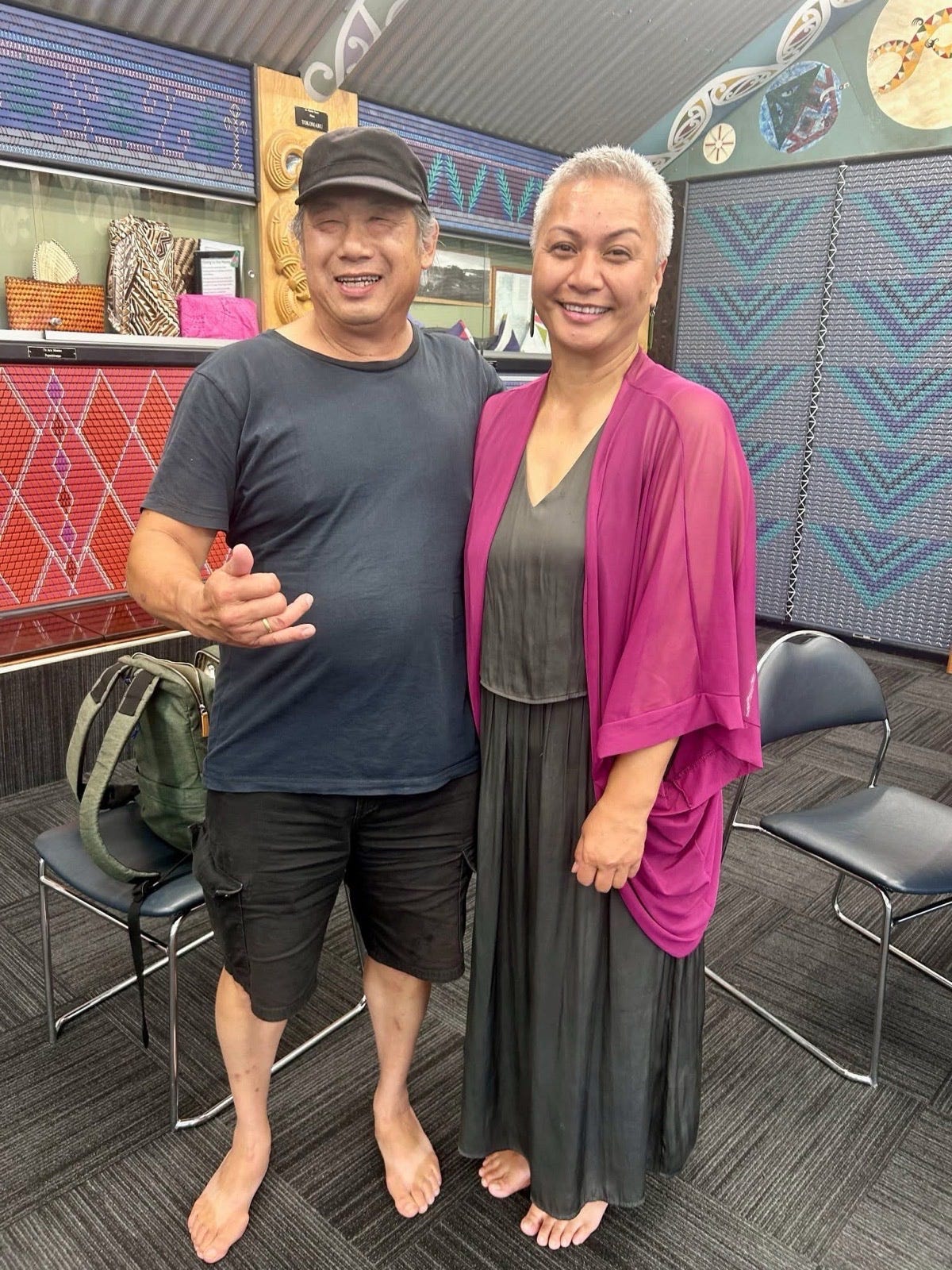
It is important to reflect that even if “blocking” is banned now (which I am deeply suspicious of), it was in regular use for decades of Tam’s involvement with the gang. I have no proof that he took part in such things, but it is true to say he was a member of the gang, attending meetings and conventions where such things were taking place.
In 1994, Harry Tam was convicted of assaulting his wife in front of their children and, in 2017, a Police Safety Order was issued that required him to stay away from his then-partner Charlotte Mildon following a “domestic incident”.
A couple of years later Tam was appointed as director of policy and research for the Royal Commission of Inquiry into Abuse in Care and had responsibilities involving the Survivors Advisory Group. Two women came forward raising safety concerns about this including Charlotte Mildon who accused Tam of Mongrel Mob stand-over tactics and abuse. An independent inquiry was announced and Tam was stood down from the role in June 2019.
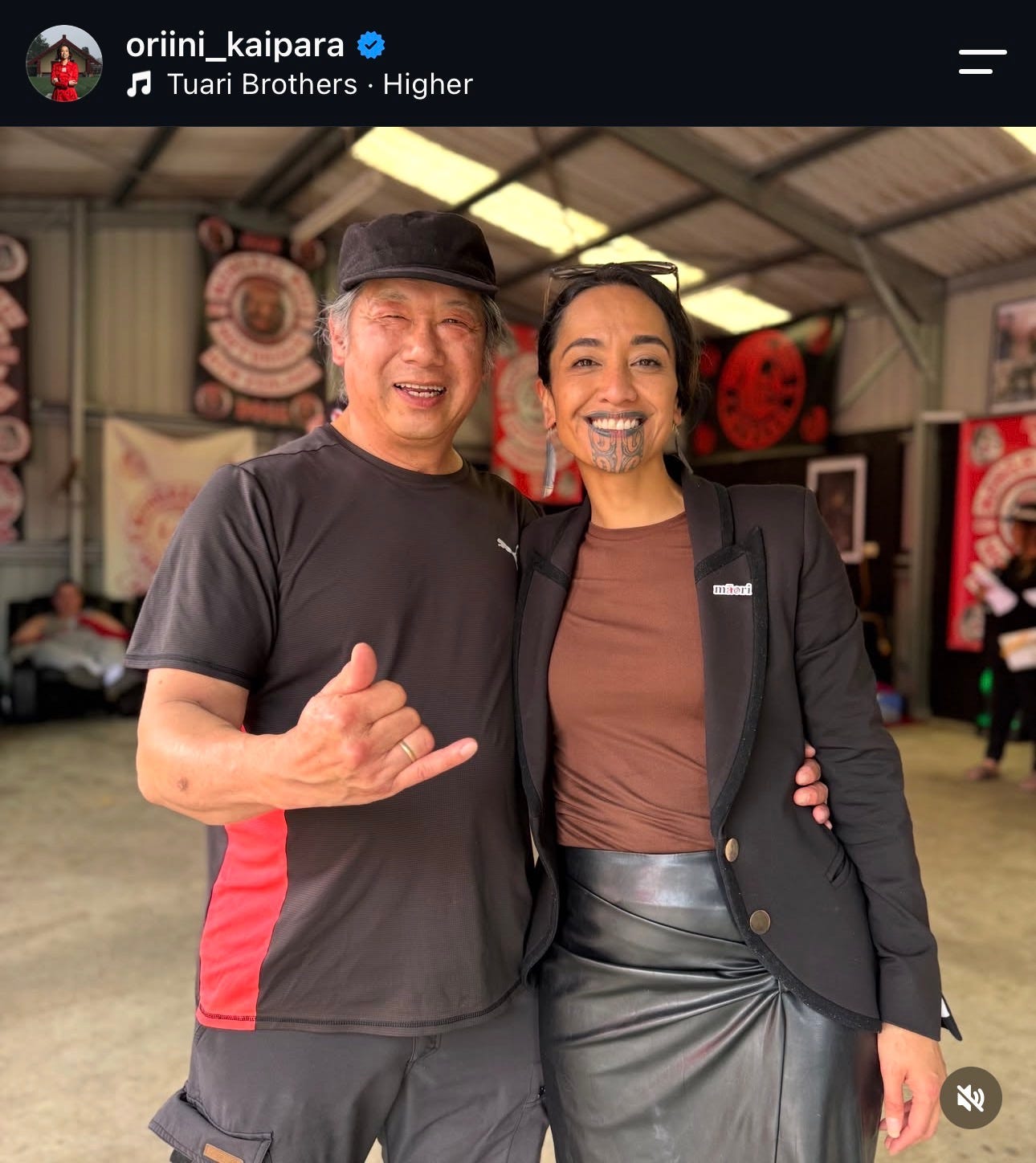
During the 2020 election campaign, Tam went on a roadshow of sorts to gang pads up and down the country to call on gang members to vote for Labour. A video eventually made its way online of one of his speeches at a pad. Here are some key quotes from it:
“In our day we did the f*** what we liked and we got away with it”
“Come September this year there is going to be this thing called a general election and we all know the leader of the National Party is ganging up on us”
“We can turn in to twenty or thirty thousand votes”
“We don’t need to take this shit from these c***s”
“Register to vote otherwise that motherf***er will get in and your lives will be hell”
“We’re the mighty f***ing Mongrel Mob and we don’t take shit from any c***, and why should we take it from them”
“Sieg Heil to the Mongrel Mob for another 1,000 years”
And it turns out, Tam did have very good reason to encourage the Mongrel Mob to support Labour. In the years that followed Harry Tam was able to earn a significant amount of taxpayer money through his company Hard2Reach. Jacinda Ardern and Chris Hipkins both publicly defended the Labour Government’s engagement with Tam and the Mongrel Mob. Especially in regards to a rehabilitation programme run by Hard2Reach and Kahukura that the government funded to the tune of $2.75 million in 2021. This came out of the Proceeds of Crime Fund. When there was a public outcry against the spending and what amounted to state support for gangs Harry Tam famously told Jack Tame on Q+A “Jacinda seems to trust me. Why wouldn’t you?”
Later, in 2023, then-Prime Minister Chris Hipkins justified MP Ingrid Leary attending a Dunedin Mongrel Mob meeting organised by Harry Tam which she claimed was a “voter-enrolment meeting”. Tam was again campaigning hard within the gang communities for a Labour-led government although he was also pushing votes toward the Greens this time.
And here we are in 2026, another election nearing, and Harry Tam is out doing the hard yards getting votes for the left wing parties. It is very cynical for Labour and their potential coalition partners to pretend there isn’t a political affiliation even if informal. The gangs don’t just hate National and their coalition partners. They spend considerable time and resources every 3 years campaigning to keep them out of Government. And while Labour has tried to distance themselves from the Mongrel Mob after the Harry Tam scandals of the Ardern/Hipkins governments, the stench remains. As does the question of why the Mongrel Mob is so desperate to have a Labour-led government.
What I have outlined here are not lurid rumours from the internet or stories made up by the National Party. This is verified history and crimes discussed in New Zealand courtrooms, and affecting real victims. The patch represents violence, drugs, rape, intimidation, and murder. The proximity the men in the photographs have to this kind of crime is not distant. They wear the bulldog on their backs and inked in their skin.
It is no surprise that Chris Hipkins came out strongly against the recent visit to the Mongrel Mob pad. He knows that while gang votes are handy to collect, the rest of the population does not look kindly upon pandering to gangs. In the leaders’ debate last night he condemned the actions of the Green and Te Pāti Māori MPs, and, when prodded by moderator Ryan Bridge, he promised that no Greens or Te Pāti Māori MP would be appointed minister of Justice, Police, or Corrections. Given he has already ruled out Chloe Swarbrick as Finance Minister, he is rapidly running out of satisfactory roles he will be able to give to his relatively large coalition partner if they form a government. However, there is also a fair argument to be made that if the political judgement made by these MPs and their parties makes them unsuitable to oversee police or the prison system, why should New Zealanders be reassured by the prospect of them sitting around the Cabinet table at all?