

Supplied by UCA News
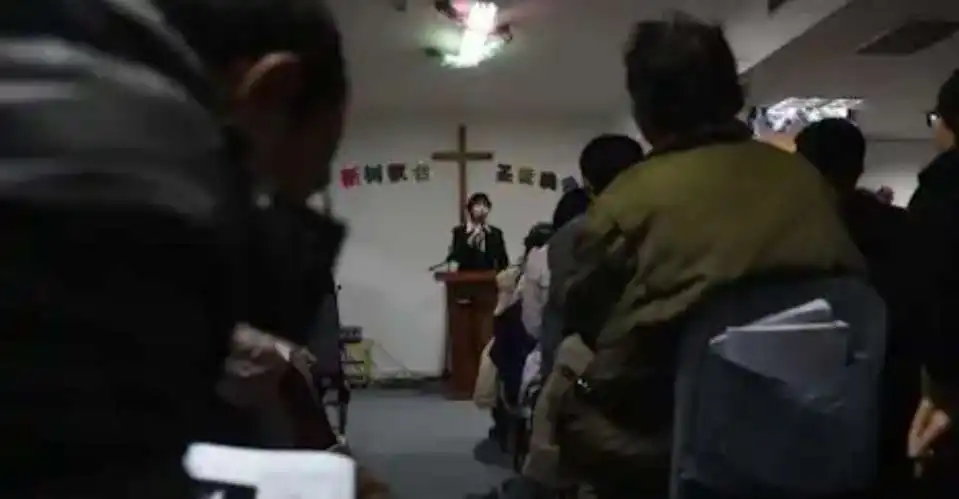
Despite state pressure continuing for more than a decade, some 115 million Christians remain outside Patriotic Churches
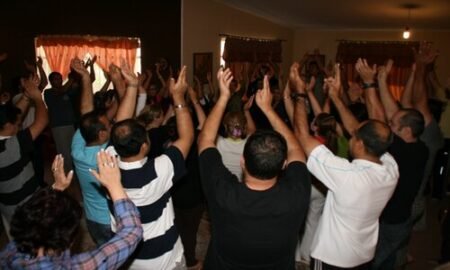
Independent Chinese Christian communities are facing an intensified crackdown as the communist government led by President Xi Jinping accelerates the controversial policy of Sinicization of religions, the latest reports show.
In the most recent crackdown in June, armed police stormed the Early Rain Covenant, an influential church that operates without state registration, and detained more than 30 members, ChinaAid reported.
London-based The Telegraph reported on July 12 that more than 10,000 Christians have been arrested across China since 2012, when Xi came to power.
Most Christians have been arrested and persecuted for functioning independently without pledging allegiance to the communist regime, according to Bob Fu, a US-based Chinese Christian and founder of ChinaAid, a charity for persecuted Chinese Christians.
Bob Fu said the ruthless campaign against the independent churches, commonly known as underground churches, aims to ensure the Chinese Communist Party’s (CCP) survival and to eliminate any potential threat to Xi’s power.
“It’s the emperor playing God. [Mr Xi] wants to be exclusive; he doesn’t want to have anything treated or worshipped as superior to him,” Fu said.
Raids and detentions
A Chinese Christian, identified only as TJ for security reasons, is among six Christians who spoke to The Telegraph. They have either been directly targeted by the CCP or have close relatives who are incarcerated.
They described police officers showing up unannounced at their homes in the middle of the night. Friends are being rounded up and questioned by authorities, sometimes for weeks. Family members are being convicted on trumped-up charges, such as “using superstition to undermine the law,” and detained indefinitely in cramped, unhygienic cells.
And lawyers are not spared. Between 2017 and 2023, at least 30 human rights lawyers had their licenses revoked, according to Ireland-based rights group Frontline Defenders.
TJ’s family of three, including a three-year-old daughter, recently faced a police raid for their membership in an unofficial church. TJ was released after questioning, but his wife has not yet been released.
The Chinese government has several state-sanctioned bodies to oversee and ensure that faith groups function in line with repressive religious policies approved by the CCP.
Dozens of faith communities and movements have been banned after being listed by the Chinese government as xie jiao (evil cults).
China’s Regulation on Religious Affairs stipulates that all who practice the Christian faith be part of either of the two state-run bodies — the Chinese Catholic Patriotic Association or the Protestant Three-Self Patriotic Movement. Any other Christian faith practice is seen as a punishable offense.
The policy has been accelerated not only by state agencies but also by the leadership of Christian patriotic associations at the national and regional levels, and those who refuse to join them face the state’s wrath.
Last October, some 30 members of the Zion Church, including pastor Jun Yang, Qu Qiuyu and his wife, and the church’s leader Ezra Jin Mingri, were arrested.
Jin was released in early July, but many of those detained remain in prison.
Threats and surveillance
Yang and other Zion Church members told The Telegraph that the police had been harassing church members for months before the arrests. The Church leaders were accused of acting against the state’s interests.
Gao Yingjia, a pastor from Zion Church, explains the rationale behind the CCP’s urge to control Christian churches.
“They fear what they cannot control and don’t understand — or don’t want to understand,” explained Gao.
Close surveillance of Christians is another form of harassment, said Ren Ruiting, a member of the Early Rain Covenant Church who fled to the US following the 2018 crackdowns.
She said even in the US, she is still under surveillance. “If I speak out, they’ll know immediately, and they have a way to make me feel bothered and make me feel bad,” she said. She doesn’t think she will ever go back to China.

The Sinicization policy was launched in 2015, and religious leaders say it officially wants all religions to follow the Chinese language and culture, but, in effect, looks to bring all religions under the state’s control.
Beginning in 2018, Beijing began a five-year plan to tighten its grip on Christians and started censoring sermons, controlling church donations, supervising Bible translations and including “Xi Jinping Thought” in the curriculum of seminary schools.
But that has not been successful, as the majority of Christians continue in “independent ” churches, according to The Telegraph.
The state-sanctioned Churches together now have an estimated 44 million members, but some 115 million Christians remain unregistered, and their number is expected to double by 2030.