OPINION: Dr. Christopher Longhurst KSO
Two years after the Crown’s apology, survivors are still waiting for the independent redress they were promised, and faith-based survivors are being left to the mercy of the institutions that harmed them.
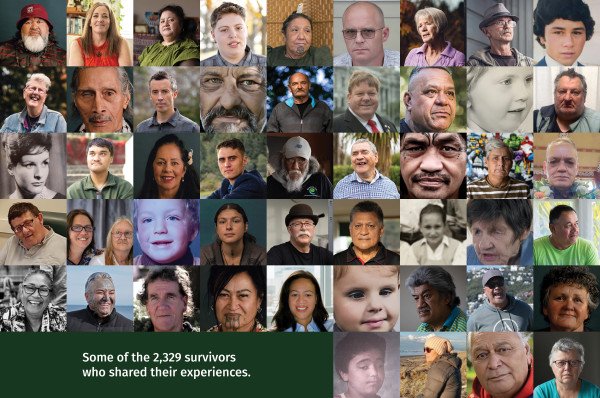
On 12 November, I joined survivors at the second anniversary of the Crown’s apology for abuse in care. Speakers shared their stories and their frustration. What struck me was who was missing.
To my knowledge, not one church leader attended, and no one was sent to listen on their behalf.
For many survivors, that absence spoke volumes. The Crown has not delivered what it promised, and the institutions that harmed so many have not even turned up to hear survivors.
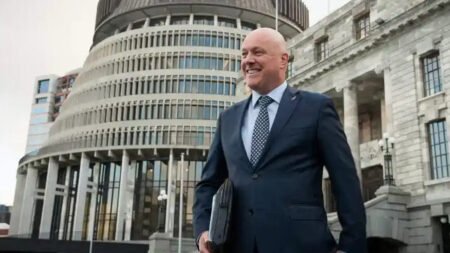
At the 2024 apology, Prime Minister Christopher Luxon told survivors that a new independent redress scheme, as recommended by the Royal Commission of Inquiry into Abuse in Care, would be established in 2025.
Instead, the Government declined in Budget 2025 to create an independent system and lifted redress payments by about $10,000, to an average of $30,000, roughly a third of what survivors in Australia receive.
Meanwhile, the Ministry of Social Development’s claims backlog has grown from 2,235 in June 2020 to 6,654 outstanding by June 2026, with some survivors waiting up to five years.
A nation is judged not by the apologies it makes but by what it is prepared to do to put things right.
“The Government is not idle. Lead Coordination Minister Erica Stanford says it is trying to improve redress while rebuilding the care system. But the Commission did not ask for a better-run version of the existing process. It asked for an independent one…”
Promising independence and delivering something else is no mere difference of emphasis. It goes to the heart of political accountability.
At the gathering, National MP James Meager told survivors: “When it comes to this kaupapa, we are united as members of Parliament in our support for you, for survivors and for making sure that we heal as much damage that has happened in the past as we can.”
Such sentiments are welcome. But they sit uneasily beside the government’s decision not to proceed with the independent redress model recommended by the Royal Commission that both Labour and the Greens continue to support. Unity cannot simply be proclaimed at anniversary ceremonies. It must be shown in decisions.
Faith-based survivors left behind
The gap is widest for faith-based survivors. They are excluded from state redress and left subject to differing, sometimes inadequate processes. In practice, that means too often being referred back to the institutions in which they were abused, an approach contrary to established safeguarding principles and expert advice.
Since the Royal Commission concluded, several survivors have reported experiencing further distress through church responses involving legal processes, reliance on legislation such as the Limitation Act 2010, and practices they believe discourage or impede their pursuit of accountability.
“The Catholic Archbishop of Wellington, for example, has been accused by survivors and advocates of refusing survivors their chosen support person at what the Church describes as pastoral response meetings, some reportedly held in the offices of Church lawyers. Survivors argue that such an approach is difficult to reconcile with a genuinely survivor-centred process.”
It need not be this way. The Presbyterian Church paused its apology after survivors advised that without a survivor voice in the room it would be hollow. The Church later did apologise with survivors present. That is what listening looks like.
When the media looks away
Internationally, journalism has been indispensable in exposing institutional abuse and amplifying survivors’ voices. In New Zealand, coverage of the Government’s response to the Royal Commission has too often been sporadic.
Credit is due to RNZ’s Giles Dexter for his reporting this year and to TVNZ for its commentary. Such
journalism ensures survivors’ experiences are not acknowledged on ceremonial days and then consigned to political history.
What must happen
Independent redress is not only a matter of justice. In a cost-of-living crisis, a historic abuse claims backlog that keeps growing is not the cheap option. A single, independent, accessible body would give survivors certainty and give taxpayers confidence that public money is buying accountability, not delay.
So, the asks are simple.
The Government must name a date for independent redress that includes faith-based survivors. Church leaders must end lawyer-led processes, honour survivors’ choice of support person, and show up when survivors gather. And the rest of us must keep asking what has changed.
Sweeping these failures under the carpet will not make them disappear. Silence
does not heal. It protects the status quo.
The Government can apologise. Churches can apologise. Institutions can apologise.
But apologies are not accountability.
A nation is judged not by the apologies it makes, but by what it is prepared to do to put things right.
Dr Christopher Longhurst KSO is a Catholic theologian, advocate for survivors, and
a leader of SNAP Aotearoa New Zealand.