


Finding a new home is rarely just about changing your address. Whether you’re relocating to a different city or entering a fresh season of your spiritual journey, leaving your old community behind is one of the hardest transitions you can face.
You aren’t just looking for weekend worship — you want a place where you can be discipled, build relationships, serve others, and find both comfort and challenge as you grow your faith.
This article will help you find and choose a Christian community where you can truly thrive.
Whatever your stage of life — from college students and young families to empty-nesters and retirees — and regardless of your faith background — lifelong churchgoer or curious first-time seeker — I want you to help you find a healthy, thriving, faithful home to call your own.
1. Start Looking for a Church Home Before You Need One
If you are relocating, don’t wait until moving day to look for a church. As soon as your destination is locked in — ideally before you even buy or rent a place— start scoping out the local options.https://www.realtor.com/creative/rdc-ads/local-listings-widget/
Just as you would research local school districts, recreational opportunities, and commute times, you should build a mental map of the local church landscape.
A great way to begin is by asking your Realtor, browsing denominational directories (more on that later), or simply scouting the area on Google Maps.
That said …
2. Go Beyond ‘Churches Near Me’
Once you land, the easiest approach is a simple online search for “churches near me.” That’s definitely a good place to start — but not a good place to end, for two reasons.
First, while convenience and proximity matter, they should not be the number one reason for picking a church. There are much more important criteria to consider, which we’ll address in a moment. Starting with a list of all the churches in a certain radius from your new home isn’t a bad idea. Just don’t pick the closest or most prominent one without doing some deeper research.
Second, for the purposes of searching, there are other keywords worth trying to both expand and narrow down your options. Try searching for phrases like:
- “Bible study near me”
- “Christian community near me”
- “Christian parent group near me”
- “[denomination] church near [city/neighborhood]”
- “college ministry near me” or “[college] Christian ministry”
- “young adult Bible study near me”
- “[women’s/men’s] Bible study near me”
These sorts of terms can help you find churches that better fit your profile. But again, don’t always count on search results to give you the best option.
3. Focus on Your Top Criteria
This should be the real meat of your search. These are the critical, make-it-or-break-it questions about the kind of church you want to belong to.
I recommend making an ordered list of the following priorities. You probably won’t be able to check off every box perfectly, but you should know going in what your home runs and dealbreakers are.
Denomination and Church Tradition
For many believers, this will be your primary filter. If you already belong to a denomination, are happily committed to it, and/or feel that it best represents Christ’s body in the world, simply narrow your search to the local church(es) in that denomination.
In some cases (such as Catholic, Baptist, or Pentecostal) you’ll likely still have several options, and you can move through your other priorities to pick the best one. But you will have ruled out tons of churches that would not be a good fit.
If you don’t already have a denomination (or are unhappy in your current one), this might be a good time to experiment. Or you can simply check out non-denominational Christian churches.
Either way, do your research.
General Theological Agreement
If you don’t belong to a denomination, this should probably take the top place on your list. You need to find a church that generally agrees with you on the most important elements of faith — such as the primacy of Scripture and how it’s interpreted, the divinity and personhood of Jesus Christ, sacramental theology, social teachings, and so on.
Most churches have a “statement of faith” on their website; that’s the first place you should look. Read it carefully. Does it align overall with your core convictions?
The key word here is “overall.” Do not expect to find a church that agrees with you on every single point of doctrine. The goal is to find a church that you trust enough on the big issues to disciple you effectively and encourage you to worship with integrity and joy.
Worship Style and Liturgy
Following theological alignment, you’ll want to find a church with a worship style that brings you closest to the Spirit. You may want to consider questions like:
- Music style: Rock band? Hymn sing? Traditional organ? Gospel? This often defines the “feel” of the church. What kind of music speaks to your soul?
- Liturgy: Closely tied to music is the liturgical style, from “high church” or formal (Orthodox, Catholic, Anglican, Lutheran) to “low church” or informal (Baptist, Pentecostal, non-denominational). Do you want a carefully constructed, consistent order of service, or something more spontaneous and free?
- Scripture: Is the Bible read during service? (If not, that’s probably a red flag.) What version(s) do they use?
- Prayer: Are prayers spontaneous or recited? Is the congregation invited to participate, or does the pastor lead exclusively?
- Communion: How often is communion served? What format and style — wafers and wine, or bread and juice? Intinction or individual cups?
- Baptism: Does the church do infant or adult baptisms? Full immersion or sprinkling?
- Creeds: Are creeds like the Apostles’ Creed or Nicene Creed read in worship, or does the church favor more personal confessions of faith?
You may not have an opinion on all of these topics. That’s OK. Just make sure to note the ones that matter to you.
Size and Structure
This section will come down to simple preference. Do you want the cozy community of a small church or the vibrant thrill of a megachurch? Neither choice is objectively better — but one will almost certainly be better for you.
- Small churches might offer grounding, familiarity, close connections, intergenerational relationships, easier opportunities to serve, and a place where you feel known and seen. For some, they are comforting; for others, stifling.
- Large churches might offer more programs, specialized ministries, greater diversity, wider community, and the excitement of large-scale communal worship. For some, they are energizing; for others, overwhelming.
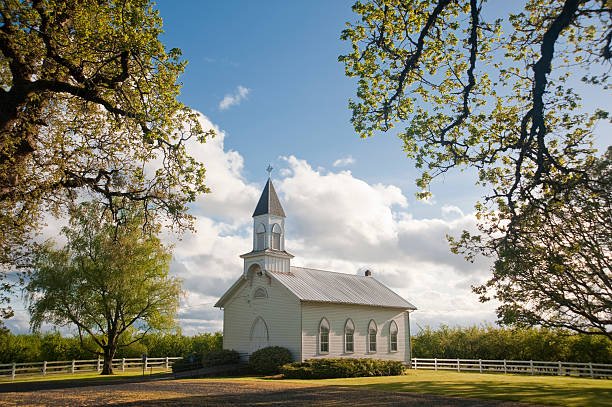
Consider also the building’s size and structure. Is it important to you to worship in a cathedral? Or are you more comfortable in a traditional, steepled church? Or something more casual and unassuming, like a modern church-plant?
Remember, church size is not a spiritual scorecard. The question is whether the church helps people like you worship, serve, and grow.
Preaching and Pastoral Leadership
Often, choosing a church also means choosing a pastor, or pastors. Though closely connected to theology and liturgy, there are two other major factors: leadership and preaching.
Leadership
Pay attention to how much influence the pastor has over the church. A strong, charismatic leader can provide numerous benefits, but beware of churches that follow their pastor more closely than they follow Jesus (see 1 Corinthians 1:11-13).
Additionally, find out about the leadership structure:
- Are there multiple pastors or only one? How do they divide leadership duties?
- What sort of qualifications are required? Formal ordination, approval from a board of elders, or simply answering an internal call? Who maintains accountability?
- What is the church’s stance on women in ministry?
Preaching
Today, it’s much easier to learn about pastors’ preaching styles than in the past. Most churches livestream their worship services and often post sermons online. You may want to watch a few before attending.
- What is the pastor (or pastors’) preaching style like? Are sermons extemporaneous or read from a manuscript? How long is a typical sermon?
- Does the pastor preach clearly and faithfully from Scripture?
- How topical does the preaching get? Does the pastor address political issues in a way that honors Christ and models fruits of the Spirit (Galatians 5:22-23)?
- Above all, does the preaching help you better understand the Bible and follow Christ?
4. Consider Your Stage of Life
Once you have a good idea about the kind of church you want and you start exploring options, take note of the composition of the congregation. Are there people like you in the pews?
Once again, this isn’t about finding a church where everyone is like you — that would be contrary to the Gospel! But you probably won’t be happy if you’re the only 20-something in a sea of retirees, or vice versa.
Families
For families, the most important question comes down to: How friendly is the church to children? There are ways this can play out:
- Are there other kids in your kids’ age range?
- Is there a church school or youth ministry program?
- Do they hold an intergenerational worship service?
- What sort of family activities, resources, and support are there?
Look beyond the offerings for your kids’ current ages, too (they grow fast!). Will there be strong discipling opportunities for them as they age up?
Young Adults and College Students
If you’re a college student in a new town or a young adult wanting to explore faith on your own, you may want to start by checking in with on-campus ministries — though as you do, keep the rest of this guide in mind.
It’s important to find local peers to explore your faith with — not just podcasts and social media. But think beyond campus life, too:
- Can the church connect you with older believers for mentorship or guidance?
- Are there small groups or Bible studies to keep you focused in your faith?
- Will there be opportunities to get involved and serve the local community?
Finding a new church can be intimidating, especially if it’s your first time doing so. It’s OK to be nervous — but don’t let that hold you back. Most Christian communities will be delighted to welcome you and answer any questions you have.
Older Adults
Finding the right church can be even harder for older adults moving to new communities — especially if you’re mourning the loss of your old one. You’ll likely want to find something that feels familiar, but don’t be afraid to take a few risks, too.
Ultimately it’s not about finding a one-to-one substitute for your old church home, but building a new community as the person you are today. Therefore, other factors might overshadow worship for you:
- How engaged is the pastor with the congregation? Can you receive pastoral visitations and care when needed?
- Is the service (and other parts of the building) accessible?
- Are there opportunities to mentor younger believers or engage in intergenerational small groups?
- Does the congregational culture welcome older members as active participants in church life?
5. Visit More Than One Church More Than Once Before Deciding
It’s helpful to research and think about your ideal church ahead of time — but that doesn’t mean you should make your final choice ahead of time. It’s best to have a short list of local churches that you are interested in. Then, get your foot in the door!
For each church, attend two or three services — either in a row, or staggered between your top picks. Afterwards, take some notes (either mentally or literally) about your experience:
- How did it make you feel? Uncomfortable? Inspired? Disengaged? Renewed?
- What did you like about it? What gave you pause?
- Was the congregation welcoming and friendly? Were they too welcoming, maybe a little desperate?
- Did anything surprise you?
If you like it enough to go back, it’s a good idea to ask about meeting with a pastor, ministry leader, membership coordinator, or other official who can answer any lingering questions.
Don’t Neglect Bible Study and Small Groups
While you’re exploring your shortlist, don’t underestimate the value of checking out a Bible study or small group, too.
Sunday worship is central, of course, but these smaller gatherings often help you get to know people a little better — and get a sense of whether your own perspective will be welcomed. They are also especially helpful after moving or when looking to build community, thanks to that opportunity for deeper connection.
6. Give Yourself Time, But Don’t Drift
Finally, let yourself move through the feelings that the search for your new church home might bring, especially in the midst of a major transition.
A pastor friend of mine likes to make a distinction between “church hunting” and “church grieving.” If you’re hungry for a new Christian community, great! Don’t rush into it, but there’s no reason to hold back, either.
But if you’re grieving the loss of your old church — whether you had to leave it behind, or because of “church hurt” that pushed you away — don’t be surprised if even a good Sunday service makes you want to spend the rest of the day crying.
It’s OK to take your time — but don’t let it turn into months of disconnection. Especially in a new location, that level of isolation can be devastating. Try to keep yourself engaged every Sunday if possible — even if it’s a different church each time. Whatever it stirs up for you, spend some time that afternoon or evening bringing it to God in prayer.
Eventually, you will find a place where you feel the Spirit undeniably calling you back.
Questions to Ask When Choosing a New Church
Here is a quick checklist that distills many of the above questions into an easily referenced guide while you are searching for your new church home.
- Is the church close enough for you to participate consistently?
- (Optional: Does the church belong to the same denomination as you?)
- Does the church’s theology align with core Christian beliefs and your convictions?
- Does the worship style help you participate honestly and reverently?
- Does the size and structure of the building and congregation invite your participation in worship and church life?
- Do the pastors and leaders seem trustworthy, humble, and accountable?
- Is Scripture central in worship, preaching, teaching, and discipleship?
- Are there opportunities for your life stage: families, students, singles, older adults?
- Is the congregation welcoming without feeling artificial?
- Is there a clear path to joining a small group, Bible study, or ministry?
- Are there ways to serve, not just attend?
- Could you imagine growing here over time?
Remember — no church will be perfect. The goal is not to find a flawless congregation, but a faithful one.
A new church home will not make a new city feel familiar overnight. But over time, worship, Scripture, prayer, service, and Christian friendship can help a new place become home.
About The Author : Jacob Edson is Editorial Director of Bible Gateway. He holds a Master of Theological Studies in Early Christian Thought from Harvard Divinity School, and a Bachelor of Arts in Religious History from Memorial University of Newfoundland, though with most of his coursework from the University of Hawai’i at Manoa. His work has previously appeared in Ekstasis and Geez Magazine. He lives with his wife and children in New England.
This article was first published by Bible Gateway