


Mike Bain/cvnznews.com
New Zealand’s aviation network remains operating normally despite Whakaari/White Island entering a phase of continuous volcanic activity, with airlines confirming no disruption to services even as the volcano emits ash and steam.
Earth Sciences New Zealand on Wednesday raised Whakaari’s Volcanic Alert Level from 2 to 3 after scientists confirmed the Bay of Plenty volcano had transitioned from intermittent emissions to a weak but ongoing eruption.
The Aviation Colour Code was also lifted from Yellow to Orange, reflecting the increased volcanic activity. However, both Air New Zealand and Jetstar said their flight schedules remain unaffected.
Scientists stressed there is no significant threat to communities on the mainland, although people in coastal Bay of Plenty areas could occasionally notice a sulphur smell or light ashfall when winds blow onshore.
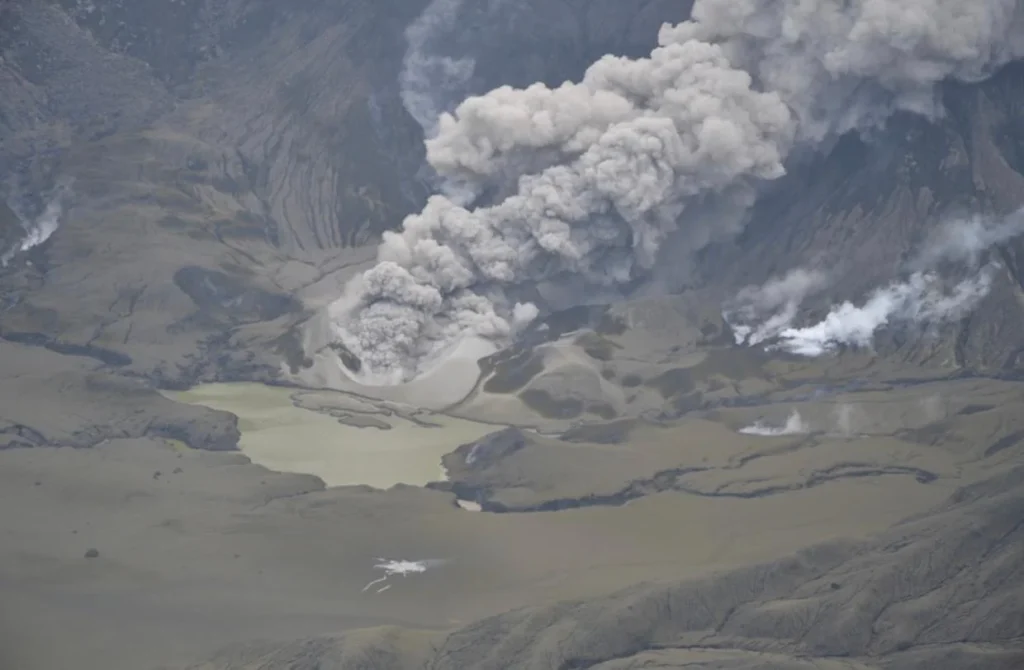
An observation flight on Tuesday confirmed a continuous plume of steam, gas and small amounts of volcanic ash rising from the island’s Main Crater. Fresh ash deposits were visible around the active vent and across parts of the crater floor.
Researchers also recorded a sharp increase in vent temperatures, rising from about 100 degrees Celsius last week to approximately 395 degrees Celsius. Satellite monitoring continues to detect sulphur dioxide emissions from the volcano on a daily basis.
Earth Sciences New Zealand said the combination of sustained ash emissions, elevated temperatures and increased gas output indicated a minor volcanic eruption was underway.
While the current activity is described as low-energy and passive, volcanologists warn conditions can change rapidly. Whakaari has a history of sudden escalations, and explosive eruptions can occur with little or no warning.
A more powerful eruption could generate ash clouds, volcanic gas surges and pyroclastic flows that would pose a danger to anyone on the island or in nearby waters. Scientists said any significant mainland impacts remain “very unlikely” unless volcanic activity increases substantially.
The current eruptive phase could continue for weeks, based on Whakaari’s behaviour during similar episodes over the past three decades.
Monitoring remains challenging because there is no functioning equipment on the island. Scientists are instead relying on satellite observations, mainland-based monitoring and occasional aerial surveys.
Bay of Plenty Civil Defence has urged boaties to familiarise themselves with the Whakaari/White Island Maritime Hazard Map and reminded vessels to remain at least two nautical miles from the volcano, in line with Harbourmaster advice.
Whakaari, located about 48 kilometres off the Bay of Plenty coast, remains New Zealand’s most active marine volcano.