


John Stonestreet, Timothy Padget,/Breakpoint.
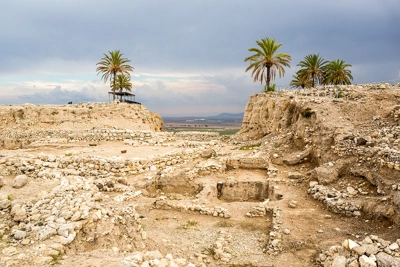
Recently, the Israeli Antiquities Authority uncovered burned wooden beams in Jerusalem dating from just after 600 BC. This would place them about the time of the destruction of the city as recorded in 2 Kings 25. The attack by Nebuchadnezzar around 586 BC marked a culmination of God’s judgment on Judah after generations of idolatry and corruption.
Finds like these not only confirm the basic story told in Scripture, but it’s also something of a fluke that the remains have survived this long. After all, Jerusalem was attacked many times in the last 2,600 years. It may be that the returning exiles are responsible. As one article about the discovery put it:
“The excavation directors believe the remains were intentionally left untouched when Jerusalem was rebuilt after the Babylonian destruction, preserving the memory of the catastrophe for future generations.”
That would be consistent with the practices of the people of God in ancient times. A consistent theme in the Bible is the call to mark and to remember God’s faithfulness. For example, when the Israelites crossed the Jordan River into the Promised Land, they built stone memorials to mark where God brought them safely through. 1 Samuel 7 describes how the prophet constructed a memorial when God defeated the Philistines. In Psalm 77, Psalm 105, Isaiah 46, and throughout the Old Testament, God’s people are instructed to remember what He had done for them, both to give them hope and warn of judgment.
Whether their foundational stories reflect reality is irrelevant to most religions. The pagan myths made no claim to be real. Even if some of The Iliad actually took place made zero difference to people’s faith and practice. Likewise, most of the Quran consists of aphorisms and rules. There is no clear context to be investigated or evaluated. Despite Joseph Smith’s claims, there is no evidence — genetic or archaeological — that Israel’s 10 tribes ended up among Native Americans.
In other words, most claims of most religions are not testable. Or, to put it in the language of logic, they are not falsifiable. But it matters immensely to Christianity whether the events described in Scripture really happened. In 1 Corinthians, Paul pointed readers to the hundreds of people who had seen the resurrected Jesus. It was, in part, an invitation to test his claim. Likewise, Peter insisted that what they believed wasn’t myth, but history with eyewitnesses. Even Christ Himself, when challenged by Thomas, offered His own body for inspection to prove He had really died and was now really alive.
The core creed of Christians is not built on abstract truisms or pieties, but history. It names a specific man — Pontius Pilate — who was a real Roman governor in Judea at a specific point in history. Every year, millions travel to Israel, Jordan, Syria, Egypt, and Turkey to see where the events of the Bible took place. And each year, more discoveries from the ancient world confirm the stories told in Holy Scripture.
The events of the Bible did not take place “once upon a time” or “long ago, in a galaxy far, far away.” They happened in this world, in measurable history. Christianity isn’t “true” in an abstract sense. King David was a real ancient warrior king. Jesus turned water into real wine, not just a spiritual metaphor. Lazarus was a real dead body that came back to real life. Christianity is true. It is historical. It is reality.