


OPINION: Michael Swanson
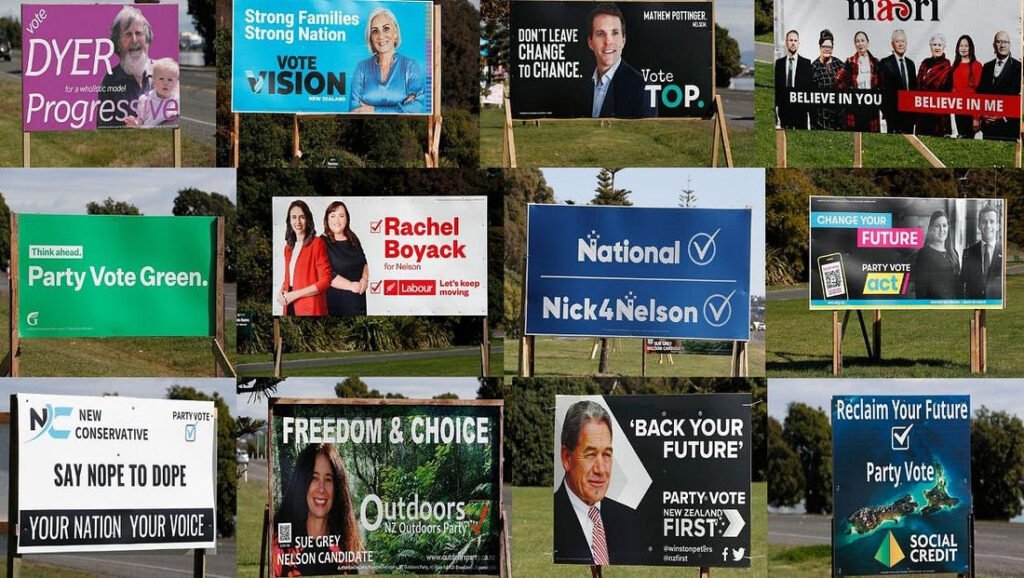
Every three years, without fail, New Zealand’s roadsides sprout a familiar crop. Corflute signs on wooden stakes, giant faces grinning out from motorway verges, slogans that could have been written any election since 1990. Billboards are as much a part of our election cycle as the leaders’ debates and the inevitable “who won” arguments the next morning. But stand back for a second and ask the obvious question: what are they actually for? And more importantly, are they worth it?
I’ll be upfront about where I land on this. I think billboards are largely a waste of time and money, an expensive ritual that political parties keep performing mostly because everyone else is doing it too. But it’s worth understanding why parties keep persisting with them, because the reasons are more rational than they first appear, even if I don’t think they add up to a good use of campaign cash.
Why billboards are such a big deal in NZ elections
New Zealand runs tightly regulated campaign finance rules. Under Elections NZ’s advertising rules, a party contesting the 2026 election can spend up to $1,503,000 on the party vote campaign, plus $36,000 for each electorate candidate, during the three-month regulated period. Individual candidates are capped at that $36,000 figure. Within that regulated spending, everything from Facebook ads to billboards to pledge cards has to be accounted for.
That spending cap is a big part of why billboards persist. Broadcast advertising on TV is expensive and heavily contested through the Electoral Commission’s broadcasting allocation, a pool of public money doled out based on past support and polling, which The Spinoff has explained tends to favour the two major parties. Digital advertising is measurable but easy for people to scroll past. Billboards, by contrast, are relatively cheap per impression, don’t require anyone’s attention or consent, and physically occupy space in a community for weeks on end. For a candidate trying to build electorate-level name recognition rather than national brand awareness, a hoarding on the main road into town does a job nothing else quite does.
Why parties actually use them
Marketing academics tend to defend billboards more than you’d expect. University of Auckland’s Dr Bodo Lang told TVNZ’s Seven Sharp that billboards genuinely do work, for two reasons: they lift general awareness that an election is happening at all, and they can nudge market share among what he called “peripheral voters”, people who aren’t especially engaged in politics and respond more to visual cues than policy detail. Auckland University’s Jennifer Lees-Marshment made a similar point, describing billboards as a gateway to greater engagement rather than a vote-changer in themselves, noting a Columbia University study found election advertising lifted vote share by only around 1.7 percent.
That’s a fairly modest return for a lot of money and effort, and it’s telling that even sympathetic academics frame the value in terms of general awareness rather than persuasion. Not everyone in the industry is convinced at all. Veteran advertising strategist Mike Hutcheson didn’t hold back ahead of the 2023 election, calling political billboards a “visual pollutant” and arguing most of the slogans on them are banal, recycled from decades past, and impossible to pack any real philosophy into.
Still, parties keep buying them, and the volumes involved are genuinely large. Ahead of the 2017 election, the National Party produced more than 15,000 signs, more than it had ever printed before, with campaign chair Steven Joyce confirming the figure. Multiply that kind of output across every major party, every electorate candidate, and every local body race running alongside them, and you end up with hundreds of thousands of individual signs nationwide in a single election cycle. A university newspaper reporter in Dunedin once counted 37 separate pieces of political signage across just two blocks of the city centre during a local election.
The vandalism problem
Then there’s the damage. Election billboards in New Zealand get stolen, defaced, driven into, and set alight almost as a matter of tradition, but the 2023 general election saw this tip into something uglier. Te Pāti Māori reported more than 100 billboards vandalised or missing across Tāmaki Makaurau and Waiariki alone, with co-leader Debbie Ngarewa-Packer’s sign driven over by a vehicle near Parihaka in Taranaki, and images of her moko kauae deliberately defaced on multiple occasions. In Tauranga, ten of the party’s signs were vandalised with a racist slur misspelt across them, alongside National, Labour and ACT signage torn from its frames in the same city.
Candidates from across the political spectrum end up spending campaign hours and volunteer time simply replacing what’s been wrecked. As one Rangitīkei candidate told Stuff during the 2023 campaign, it’s frustrating for volunteers who put real effort into getting hoardings made, installed and maintained, only to spend the next morning fixing what someone tore down overnight. It’s money and time that could go toward actual campaigning, spent instead on corflute repair and reprinting.
So, what’s the actual point?
Here’s my honest take. Billboards cost real money, out of spending caps that are supposed to fund a competitive contest of ideas. They get stolen and vandalised at a rate that would be considered an unacceptable loss in almost any other form of advertising. Multiple advertising professionals openly call them visual clutter with a shallow, recycled vocabulary of slogans. And the best evidence for their effectiveness amounts to a fairly small bump in vote share, mostly attributed to general election awareness rather than genuine persuasion.
So why do parties keep doing it? Because in a race where every rival is putting up hoardings, opting out looks like conceding ground, even if the marginal benefit of one more sign is small. Because electorate-level name recognition genuinely matters in a way national branding doesn’t fully capture, particularly for lesser-known candidates. Because billboards are one of the few advertising forms where the spend is visible to voters and to the media, which itself becomes a signal of momentum and seriousness. And because campaigns are, fundamentally, risk-averse operations that rarely want to be the first to break with tradition.
None of that convinces me they’re a good use of money. But it does explain why, come this November, our roadsides will look exactly the same as they always have.