



Ryan Foley,
As Samaritan’s Purse battles a growing Ebola outbreak in the Democratic Republic of the Congo (DRC), CEO Franklin Graham is urging Christians around the world to pray for the ministry’s frontline workers as they care for patients under what he described as increasingly difficult conditions that are “much worse than we initially thought.”
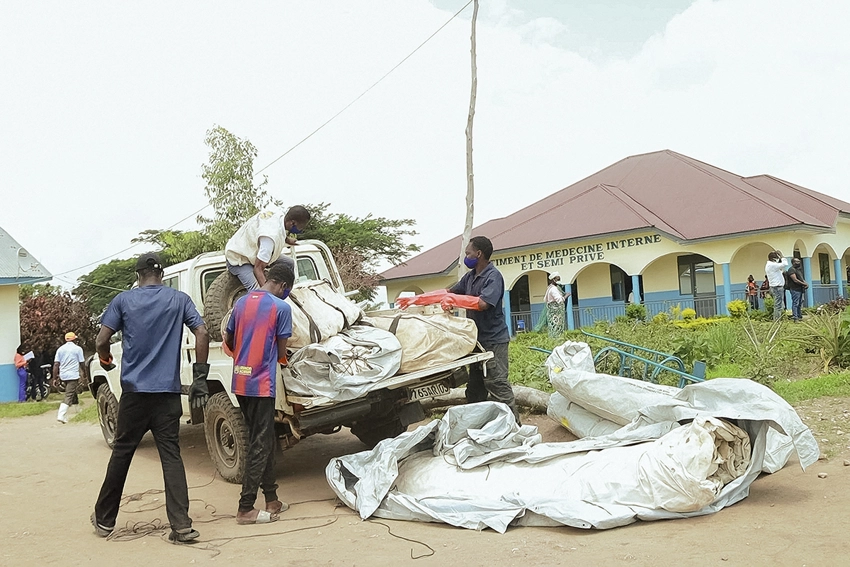
In an X post Tuesday, Graham said Samaritan’s Purse has opened two 40-bed Ebola treatment centers in northeastern DRC, the region he called “the epicenter of the outbreak.” The facilities opened as concerns grow that the outbreak might be more widespread than initially believed.
“We believe the Ebola outbreak is much worse than we initially thought,” Graham told The Christian Post. “We think it’s much more spread because it went undetected for several weeks, and it’s very difficult.”
The Evangelical relief organization currently has 70 disaster assistance response team members serving in the region, including doctors, nurses, technicians and support personnel.
Building and operating an Ebola treatment center requires far more than medical staff, Graham explained, noting the need for people who know how to “keep things running.”
“Even though we do have a well, we have to take that water, then we have to run through a purification system and then put up our own storage container,” he said of the logistical challenges of opening the treatment centers and keeping them operational.
“We can’t rely on the local power grid, it goes up and down, so we take our own generators,” Graham said, likening the treatment centers to their own cities, adding, “You have to have all this just so that you can begin to take patients.”
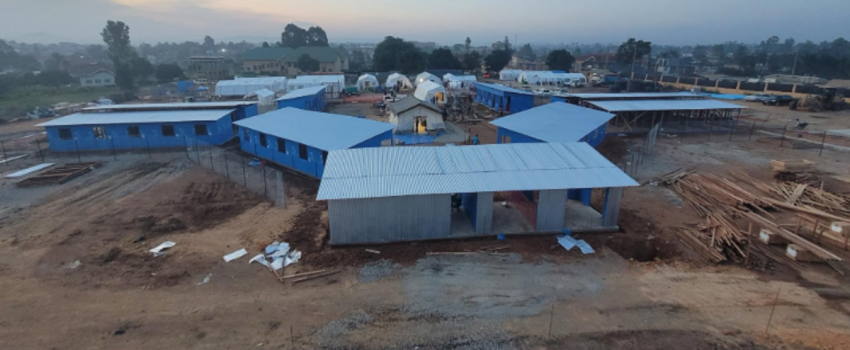
One treatment center was built from the ground up in Bunia, while the second was established in Nyankunde near a hospital that Samaritan’s Purse has partnered with for years. Most of the ministry’s personnel are based in Bunia, while local doctors and nurses operate the Nyankunde facility.
“You’ve got to have all the protective clothing,” Graham added. “That is an issue and you cannot be partially covered. You just don’t put a mask on and walk in the room or have rubber gloves on over there. … Every bit of exposed skin has to be covered. And a person working in that environment can only work for about 30 minutes, and they have to come out. First of all, it’s the heat of just being in that part of the world and then to be completely gowned with no air whatsoever, a person cannot do that more than 30 minutes.”
“We have to take them out. They have to be degowned, all the clothing that they had on, that has to be sprayed down with a Clorox-type solution and then they put the street clothes in and then we take them into a place where they can [get] air conditioning and try to cool them down and then after a few hours, put them back in again.”
Graham also discussed the “isolation system” set up at the treatment centers: “Everybody that comes in, they’re all sick, but you don’t know if it’s Ebola. It may be malaria because they look a lot alike when they’re just early symptoms. So you have to treat everybody as though they have malaria.”
Graham recalled how, when the treatment centers opened, “people were lined up in the street. They didn’t want to go to other treatment centers; they trusted us and wanted to come to ours.”
One major challenge is testing.
According to Graham, government-controlled testing can take four to eight days to produce results. “Unfortunately, the tests right now are slow, and the government controls the testing. If we had our own laboratory, we could test it and have a few hours turnaround on the test. But right now it takes four to eight days, and it’s not been much better than that,” he said.
“It’s very difficult circumstances, and we believe the Ebola is much worse than we initially thought,” he added. “We think it’s much more spread because it went undetected for several weeks, and it’s very difficult.”
Graham said IV fluids are the main remedy offered to patients who come to the treatment centers, and expressed hope that Samaritan’s Purse would soon have access to the antibodies that can treat Ebola.
Commenting on the status of the outbreak, Graham lamented that it “appears as though it’s increasing.”
Graham said Samaritan’s Purse doesn’t intend to open any additional treatment centers in the DRC, instead sharing his hope that his organization’s relief efforts could serve “as a model for others to come in and even local DRC groups could model what we’re doing and take the same and do it somewhere else.”
“We need prayer,” Graham stressed. “Our 70 staff members, they’re there for a month or so and then [we] rotate them out and then they get a new team in, and then they’re there for a month, and then we got to rotate them out and get a new team in. And this is complicated because the borders are closed between DRC and Uganda, and if you come back into the United States from the DRC, you could be quarantined and so forth, and it’s not easy. … We just ask people to pray and that God would continue to guide and direct us.”
Graham added that it might take several months for the Ebola outbreak to dissipate. “These things go on a cycle, and some people feel that this cycle will peak in about two to three weeks, and then it can be months for it to disappear. So it has a natural life of its own.
“I’m talking about people that do this for a living, that study these things. So it’s going to be peaking in a couple weeks, and then once it peaks, it’s still going to be out there for some time.”
Graham told CP that “older people are more affected” by Ebola because “children seem to be a little bit stronger, a little bit more resilient.”
“We’ve already had two of our staff die,” Graham said, clarifying that two of the 300 permanent Samaritan’s Purse staff in the DRC have died of Ebola.
The opening day of the treatment centers also wasn’t without tragedy, as Samaritan’s Purse staffers had to watch a baby die of Ebola.
Graham stressed that early detection remains critical to survive Ebola.
“What happens is people wait and that’s what happened to our staff. … Well, one staff person was sick but didn’t know it was Ebola. … They got sick before it was detected, and they just, we were not able to get them through it.”
Despite the grim circumstances, Graham pointed to signs of hope.
“We’ve already seen several cases of people that have had Ebola that have been able now to be discharged; not from our treatment center, but from others’ treatment centers,” he said.