



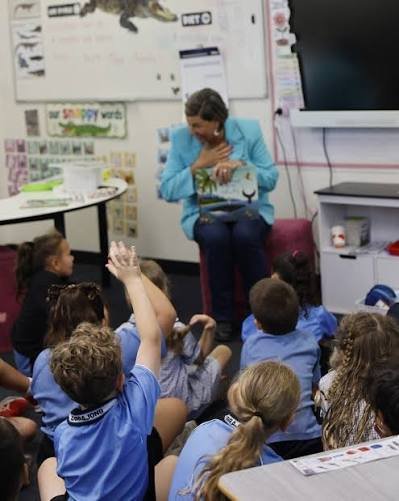
Sarah McMillan/cvnznews.com
Despite high fuel prices, being forced to eat school lunches, and a tough winter term, Kiwi students turned up to class in numbers not seen for a decade, according to provisional Ministry of Education data released by Associate Minister of Education David Seymour.
Term 2 2026 saw 64.2% of students attending school regularly, up sharply from 58.4% in Term 2 2025. Regular attendance means a student is in class for more than 90% of the term. Seymour says the message is simple: when the Government treats attendance as a priority, families respond.

“This data shows attendance rates continue to rise under this Government. We’re focussed on fixing what matters, and few things are as important as school attendance,” Seymour said. “Under this Government attendance during tough times has skyrocketed.”
The turnaround is stark. In Term 2 2022, regular attendance sat at 39.6%. Four years later, roughly 199,134 more students are now showing up consistently. Seymour says both students and parents “should be proud.”
Some regions saw particularly strong gains.
- Bay of Plenty recorded the biggest jump, rising 8 percentage points to reach 60.5%.
- Nelson/Marlborough/West Coast followed with a 7.3‑point increase to 64.8%.
- Tāmaki Herenga Waka (Auckland) climbed 7.1 points, reaching 57.8%.
Seymour says the Government’s attendance initiatives are now fully in force, and he expects the upward trend to continue as schools and families become more familiar with new tools.
A key change is the requirement for every school to implement an Attendance Management Plan (AMP), creating escalating responses for repeated absences.
- 5 days absent: School contacts parents to identify reasons and set expectations.
- 10 days: Leadership meets with the family and student to address barriers.
- 15 days: Case escalated to an Attendance Service Provider. Beyond this point, prosecution for non‑enrolment or persistent absence becomes possible.
Budget 2025 allocated $140 million over four years to strengthen attendance services. Seymour says the system has been reorganised, contracts tightened, and support increased for providers delivering strong results.
“Attending school is the first step towards achieving positive educational outcomes,” Seymour said. “These are opportunities every student deserves.”
The Ministry notes the data is provisional and may shift slightly. Covid‑affected years 2020 and 2021 are excluded due to inconsistent recording methods.