


OPINION: Michael Swanson.
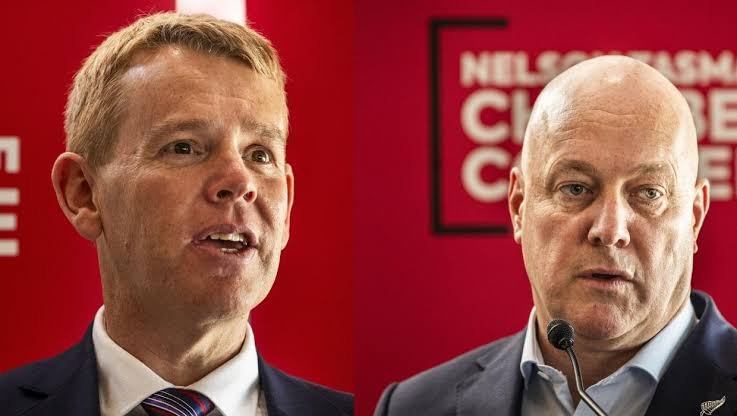
With the 2026 election drawing closer, both major parties have settled on a strategy that tells you almost as much about the state of New Zealand politics as it does about either party’s actual plans for the country. Labour and National are both playing small target politics: say as little as possible, offer as few policies as possible for the other side to attack, and hope the electorate punishes your opponent more than it rewards you for actually standing for something.

RNZ’s coverage of the campaign has described Labour’s approach as deliberately cautious, avoiding “policy announcements that can be picked apart by the government.” It’s an understandable tactic given Labour crashed from 50 percent in 2020 to under 27 percent in 2023, but as the Democracy Project has noted, a party running a “small target” or “Ming vase” strategy borrowed from Australian and UK Labour risks looking like it stands for nothing much at all, even against an unpopular government. National, for its part, has matched the caution. When Labour finally released a fiscal strategy in August, Newsroom reported that National responded by ruling out any new taxes if re-elected, shrinking its own target even further. Two major parties, both narrowing the space in which they can be attacked, and in the process narrowing the space in which they say anything of substance.
This isn’t unique to New Zealand. It’s a pattern lifted from overseas campaigns where oppositions decided that the safest path to power was to avoid giving the incumbent anything to shoot at. But there’s a cost to it, and that cost is the subject of this piece. When both major parties are playing not to lose, rather than playing to solve anything, it leaves an enormous amount of space for smaller parties, and frankly for bolder thinking generally, to step into.
The gap that opens up
Here’s the thing about a small target strategy: it’s not really about avoiding risk in the abstract.
In practice, it means avoiding the two or three genuinely difficult conversations New Zealand needs to have, because any specific answer to those questions creates a target. Housing supply and the tax treatment of property. The long term funding of superannuation and healthcare as the population ages. Climate adaptation costs for infrastructure that’s already failing. Regional inequality. All of these require choices that will upset somebody, and a party trying to make itself small doesn’t want to upset anybody it doesn’t have to.
The result is that both major parties end up converging on a narrow, cautious middle ground, dressed up in fiscal responsibility language. Labour’s own fiscal strategy this year committed to a surplus by 2029/30 under the traditional OBEGAL measure, and to capping core Crown spending and revenue at 33 percent of GDP.
That’s not wildly different from the settings National has already put in place. When your opposition’s fiscal rules look almost identical to the government’s, voters looking for an actual alternative have to go looking elsewhere. That’s the gap. It’s an opening for the Greens, for Te Pāti Māori, for ACT on the other side of the spectrum, and for any party willing to make an argument rather than a calculation.
Why the caution runs so deep
I want to be upfront that I’m not an economist, and I don’t claim any special expertise in economic theory. But you don’t need to be an economist to notice that almost every political conversation about what New Zealand can or can’t afford gets funnelled through the same narrow set of concepts: tax, spending, and debt, discussed as though the government budget works the same way a household budget does. Save before you spend. Don’t borrow more than you can pay back. Keep the credit card under control.
The trouble is that a country issuing its own currency, with a floating exchange rate and minimal foreign currency debt, isn’t actually constrained the way a household is. That’s my understanding of the core argument of Modern Monetary Theory, and while MMT remains contested among economists, its proponents make a case worth taking seriously.
Adelaide-based economist Steven Hail, who has run seminars on the topic in New Zealand, has argued that as long as the government remains what MMT calls a monetary sovereign, it cannot be forced into a debt crisis in its own currency, because it is the issuer of that currency rather than a user of it in the way a household or a business is. He’s put it plainly elsewhere too, in a piece for interest.co.nz making the point that a government is nothing like a household because it creates the money it spends.

You don’t have to sign up to the full MMT programme to think this reframing is useful. In more mainstream New Zealand commentary, Bernard Hickey has made a related argument for years without needing the MMT label at all. Hickey has pointed out that ratings agencies themselves see far more borrowing headroom than our politicians are willing to use, noting that S&P Global had assessed the Crown’s AAA rating as far from fragile, with billions of dollars of borrowing capacity available before any downgrade risk. He’s argued that both major parties have quietly agreed to keep tax and net debt around 30 percent of GDP as an unstated rule, a self-imposed limit that isn’t really grounded in any external necessity, and which he’s called one of the “shibboleths” underpinning three decades of underinvestment in infrastructure and public services. More recently, he’s written that the current government’s fixation on shrinking its way to lower debt hasn’t delivered the growth or lower mortgage rates it promised, while public debt keeps climbing anyway.
None of this means debt is automatically good, or that governments can spend without limit. Real constraints exist, inflation chief among them. But treating debt as automatically bad, and framing every policy debate as a household budgeting exercise, forecloses conversations that deserve to be had on their merits. Should we borrow to fix a genuine infrastructure deficit when the return on that investment plainly exceeds the cost of borrowing? Should the government use its balance sheet to solve a housing crisis in a country with, as Hickey has noted, some of the least affordable rental housing in the OECD? These aren’t reckless questions. They’re the kind of questions an economy with room to move should be able to ask openly.
Where this leaves the smaller parties
This is the gap that small target politics creates. When Labour and National both retreat to the safety of near identical fiscal rules, dressed in the language of discipline and prudence, the actual argument about what New Zealand needs, and how to pay for it, doesn’t happen in the mainstream campaign at all. It gets left to whichever smaller party is prepared to make a bold, specific case and defend it.
That’s a real opportunity, but it comes with risk too. A small party that goes big on policy exposes itself to exactly the scrutiny the major parties are trying to avoid. The difference is that smaller parties don’t need 40 percent of the vote to justify taking that risk. They need to be memorable, distinct, and credible to the slice of the electorate that’s tired of the same conversation. If the two big players keep shrinking their targets, the parties willing to be bold about tax, about debt, and about what government can actually do with its own balance sheet, are the ones who stand to gain the most from the space that’s left behind.