

Dr. Christopher Longhurst KSO
Theology is often assumed to be in decline today. Yet it has probably never been more intellectually vibrant.
As an academic discipline and a global field of study, it is broader, more diverse, and more interdisciplinary than at any point in its history.
Several trends support this claim. Comparative and interreligious theology are flourishing. Public theology is expanding, and transdisciplinary theology is developing.
Nevertheless, confessional theology remains under pressure in most Western countries today, probably because it is still shackled to the medieval formula of an 11th century monk who argued that belief should precede understanding.
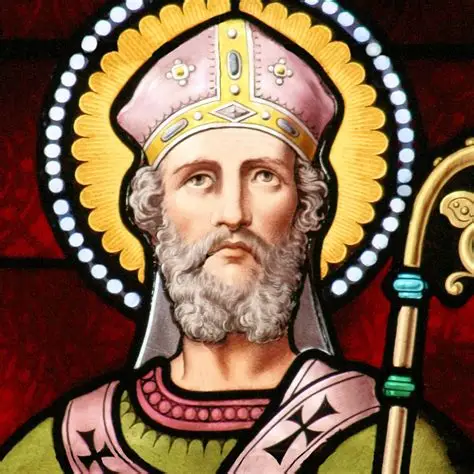
Anselm of Canterbury —often called the father of Scholasticism — gave theology one of its most enduring lines: Credo ut intelligam, “I believe so that I may understand.” His influence is immense, but his formula has quietly shaped confessional theology in ways that now deserve re‑examination.
In other words, Anselm was a giant. A millennium later, we’re still quoting him.
His words are both elegant and memorable. They have guided Christian thought for centuries. Faith first, understanding second.
But it also raises a tension: does beginning with belief limit the inquiry before it even starts? Does theology become an echo chamber if the conclusion is assumed at the outset?
To be fair, Anselm was no enemy of reason. He did seek understanding. An intellectual giant of the Middle Ages, he believed faith opened the way to deeper understanding. The difficulty lies not with his monastic project but with the later elevation of his personal credo into a universal, faith-based definition of theology.
Today, Anselm’s dictum functions as a gatekeeping device, quietly telling anyone who wasn’t raised inside the fold or blessed with the divine gift of faith that theology isn’t for them. Now it’s time to say it plainly: Anselm doesn’t get the last word anymore.
Think about how strange that medieval formula actually is. As an epistemology, credo ut intelligam is a form of intellectual protectionism. The epistemic contract has already been signed before the evidence has been weighed. Strip away the Latin and it’s simply this: believe first, think later, and hope the thinking never threatens the believing.
That’s not a path to truth. It’s a loyalty test. It protects faith from criticism by making inquiry conditional on prior commitment. Anselm may have sought understanding, but only after faith had already settled the destination. His inquiry became less an open search for truth than a search for permission to keep believing what he already believed.
Nowadays, understanding often leads people to faith, rather than serving as the hoped-for reward of those who already believe. Today, the traffic often runs in the opposite direction.
That’s why I’d like to flip Anselm’s formula and recover a complementary principle: intellego ut credam—“I understand so that I may believe.” In other words, theology is not just fides quaerens intellectum—“faith seeking understanding.” It’s humanity’s disciplined search for understanding of ultimate reality, wherever that search begins.
This is not a rejection of Anselm, but a demotion. His formula described one path into theology—the path of the believer already inside a tradition, articulating and deepening a faith they hold. But this can no longer describe the whole territory.
The irony is that a knowledge-based approach such as intellego ut credam is arguably more biblical than the pious alternative. Luke opened his Gospel not with a confession of faith but with an inquiry. He carefully investigated everything before writing a word (Luke 1:1–4). The Bereans, in Acts, were praised not for swallowing Paul’s preaching whole, but for first scrutinising it against the Scriptures (Acts 17:11). Proverbs treated the pursuit of wisdom—searching, seeking, crying out for insight—as the very route to knowledge of God (Proverbs 2:3–6). Scripture itself keeps handing the microphone to the discerning inquirer before the believer.
This matters immensely beyond seminary walls. Theology today isn’t a private conversation among seminarians and clergy. It’s doing important work in public—confronting real-life issues such as bioethics, climate change, artificial intelligence, trauma and human rights, and the shape of a good society. Those discussions belong to everyone, not only to those who can recite a creed.
A theology that insists on faith as a precondition, or concerns itself primarily with devotional practices rather than the great intellectual, ethical, and social questions of our time, risks marginalising itself within the theological academy—the very place where its voice is most needed.
Even recent Popes have recognised this broader vision. Francis’ 2023 Ad theologiam promovendam promoted theology as intentionally contextual, dialogical, and transdisciplinary—hardly the closed conversation of the converted. That was not a fringe relational, dialogical, and intellectual character.
Leo XIV’s theological method does not confine theology within the boundaries of prior faith commitment alone. Magnifica Humanitas (2026) reflected a theology that emerges through engagement with humanity’s deepest questions, shared experiences, and collective search for wisdom.
None of this means theology has dissolved into something it is not, with no accountability to its sources. What it no longer requires is isolation within one religious tradition, and the theologian’s signed statement of belief before the study begins.
Anselm wasn’t wrong for his medieval monastic context. He was writing for monks about faith and Christian discipleship. But holding up an eleventh-century monk’s personal credo as the definition of an entire branch of knowledge in the twenty-first century isn’t fidelity to tradition. It’s a failure to accept that the world has moved on.
Anselm still has a voice. He simply no longer has the final word. Theology no longer waits for permission to start. It begins wherever the search for ultimate reality is serious and allows faith to be discovered rather than presumed.
Advertisment