
Colin Ambler/cvnznews
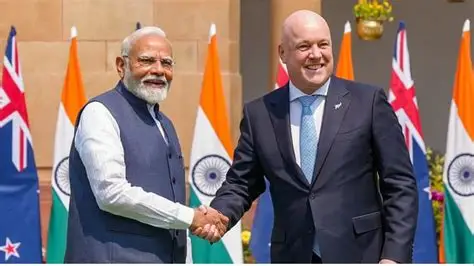
Forty years is a long time to wait for an Indian Prime Minister — but the timing of Narendra Modi’s visit next week couldn’t be more charged. New Zealand is in the middle of a national conversation about immigration settings, workforce pressures, and whether the new India trade deal will genuinely deliver for Kiwi exporters. Into that mix walks the leader of one of the world’s most powerful economies.
Prime Minister Christopher Luxon says the visit marks a “historic” moment, with India now one of the fastest‑growing economies on the planet and a key pillar in New Zealand’s long‑term prosperity. The two countries signed a New Zealand–India Free Trade Agreement in April, a deal the Government says will unlock jobs, boost exports, and help double New Zealand’s export value by 2034.
Under the agreement, 95 percent of New Zealand’s exports to India will eventually face zero tariffs, with more than half tariff‑free from day one. Luxon argues this opens the door to a market of 1.4 billion people, giving New Zealand exporters a scale they’ve never had before.
But the visit also arrives at a moment when many New Zealanders are asking hard questions:
- Will the trade deal actually benefit small exporters, or mainly large corporates?
- How does deeper engagement with India fit alongside concerns about immigration levels and workforce pressures?
- Can New Zealand balance economic opportunity with social strain?
Luxon says discussions with Modi will cover trade, investment, maritime security, education, technology, tourism, sport and global issues — but also the “people‑to‑people” ties that already shape daily life. Kiwi‑Indians now make up around 6 percent of the population, contributing strongly across business, technology, health, science and more.
“This visit is about celebrating a winning partnership,” Luxon says, emphasising prosperity and security for both nations.
Modi will arrive in Auckland on Friday 10 July and depart the following day. New Zealanders will be watching closely — not just for diplomatic symbolism, but for what this visit means for the country’s future direction.
If you want, I can produce a sharper headline set, a social‑media version, or a more confrontational editorial angle.