



Mike Bain/cvnznews.com
The Green Party says its latest economic development plan would help create 284,000 jobs over the next four years, but for many voters the real question is simpler: Will it help me find a better-paying job and make life more affordable?
Released this week, the plan focuses heavily on boosting research, innovation, science and infrastructure investment, with the Greens arguing this would create thousands of additional jobs while strengthening New Zealand’s economy.
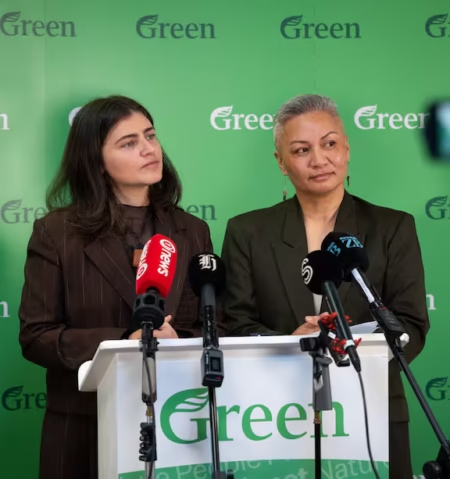
Green Party co-leader Chlöe Swarbrick says the package would lower living costs while creating opportunities for workers, researchers and businesses.
According to the party, 220,000 jobs are already forecast over the next four years. The Greens say their policies would add a further 64,000 jobs on top of that total.

For workers and families, the proposal centres on increasing investment in industries that generate higher-skilled and higher-paid employment. The party wants to lift New Zealand’s research and development spending to 3 percent of GDP, well above current levels.
Among the key initiatives are an “Innovation Boost” to encourage productive business investment, new fellowships to support researchers and technical specialists, additional funding for tertiary institutions, and an “Idea to Export” pathway aimed at helping Kiwi innovations become commercially successful businesses.
The Greens also want government agencies to place greater emphasis on supporting New Zealand-made products and services through public procurement.
Supporters will see the plan as a long-term strategy to move New Zealand away from reliance on housing and consumption towards innovation, technology and advanced manufacturing.
However, questions are likely to be asked about the cost of the proposals and whether the projected job numbers can be achieved in practice. Critics may also argue that businesses need lower compliance costs and reduced regulation rather than increased government direction.
The announcement comes as parties increasingly focus on economic issues in the lead-up to next year’s election, with voters facing ongoing concerns around household budgets, wages, housing costs and job security.
For many New Zealanders, the success or failure of any economic plan will ultimately be measured not by impressive projections but by everyday outcomes: more secure employment, higher wages, lower living costs and greater opportunities for the next generation.
Those are the promises voters will be looking to test as election season gathers momentum.